



Authority and Conscience
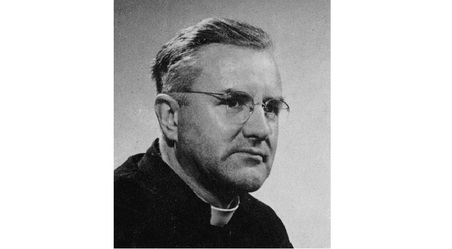
Edward Holloway
Authority and Conscience are perhaps the most controversial themes in the many controversies which beset the Church at the present. If possible these twin themes should always be treated together, for they are twin themes. Ultimately the point we hold on the one must influence the status we give the other.We will begin with authority as magisterium, that is to say as the teaching office and function of God through men in the Church. The heart principle of magisterium is always that it is the teaching of God among His People, conveyed and ministered, as it must be, to men who are membered to Him in a special way.Sadly we rarely bring home to ourselves how unique and tremendous is the character and tone of that book, (and beyond the book, of that way of life unto God) which is the Bible. It is the history of salvation which spills explicitly the onto the page from Abraham to this present time, but which is conscious of a lineage much older still, untraceable in detail through mists of time, until it reaches even "to Adam, who was of God".The ethos of the Old Testament which looked forward to Christ, the Anointed of God, is utterly different from the other religions of men. There is much sweetness beauty, much power to save, in the sacred books of Buddhism, and in the purer and nobler forms of Hinduism. The books of Confucius are much underrated in the West and it is no coincidence that most of the moral law and evangelical inspiration of Mahommed is taken from the Old Testament and from the Gospel, especially of St. Matthew.This is as it should be. All the spiritual wealth of humanity and loveliness of life are the treasury of Christ. At His coming again He will "subject all things to Himself" as King and, last of all, in final victory over all that is defective, even death itself. God is no snob, He always tries to get through. And where we find the fruits of His grace outside the Judeo-Christian line it should be no scandal, but a matter for thanksgiving that life and knowledge and love have managed to get through, albeit in defective measure and with many an incidental distortion.Nonetheless there is only one focus through which all the fulness of God unto men can be expressed in perfection of perspective and proportion, and that will be found through the unique centre of centres which is the Church of Christ founded on Peter and upon the brethren who allow themselves to be confirmed in Christ through Him.The unique character of the faith of Abraham, of the priesthood of Aaron and of the prophets consists in this: that from the very beginning the line of life, teaching and law given to men is aware of its special prerogative; that it ministers a direct divine communication and communion unto men. In the religion of Israel, God is present to men in the social life of prayer and faith as a real presence, as an actor upon the scene, as the principle of dynamism from whom the teaching and the vision which leads to fulfilment procedes.It is otherwise in the noble faiths of the East. Gautama the Buddah and all the gurus and holy men of the East can but invite men to share in a secret wisdom which they have found. They invite and lead towards the Master, but they do not proclaim and propound Him. There is no other faith in all the world which proclaims and thunders, in season and out of season, with the tide of culture or against the tides in the affairs of men. "Thus says the Lord our God, the God of Israel."The people of Israel were conscious that God intervened in their affairs. He acted with His people, He formed them and led them. He could be angry, too, angry almost to anhilation and yet never reneging on His covenant love. God was in communion with Man in Israel. It could be said of Him "I am the Way, the Truth and Life" even before the Word was made Flesh and dwelt among us.There is a unique tone of authority in the faith of Abraham which we do not find in other religions. The religion of Israel has already those marks of the international economy of God which these others do not have. The faith of the Law and the Prophets did not despair of the 'massa damnata' - the hopeless, wearisome majority , the kind who are so often perceived as beyond redemption in their carnality and utter stupidity. It did more than wearily commend them to their 'karma' with infinite but aloof and helpless compassion.It entered upon the common life and the way of the common man, entered too as challenge and as judgment into the life of both peasant and prince. It entered upon the very priesthood which had at times grown so arrogant and compromised by the very seductions of its princely way of life. There is no sign in the prophets of Israel that it is the religion of the generality of men which is the norm of the acceptability of truths of faith or of morals.This faith, in great priest and great prophet, thundered against the littleness of the average human heart and proclaimed that Man was made to the image of God, not to the image of our own fallen humanity. The Messiah, who comes as the peak and perfection of this line marked by divine compassion and divine command, likewise cared for all, despaired of none, respected the persons of no manner of men. Christ confirms and consummates this proclamation and utter lack of common sense. Man could and must reach up to his Lord and be perfect, even as his heavenly Father is perfect.Man did not judge God; the perfection of God judged the weakness and sinfulness of Man. But man, poor and needy for God, could turn to Him like the child at it's mother's breast, could draw life from God life and life ever more abundant. What was impossible to human impotence became strong and valid through the life drawn from God.The very words of Christ: "without Me you can do nothing", recognises Man's real and actual, even physical need to be fulfilled in God - and through none other. Our Lord, who was the consummation of the Law and the prophets, makes explicit in all its fulness a doctrine and a relationship which was already there in a lesser degree of recognition before the older Covenant passed away in the Person of the Heir to the Ages.This then is authority: not naked sanction, not mere force, but the living formation of men by God, a formation effected through truths and ideals, through personal love. It is a work mediated by God to men through other men, until fulfilled above measure and fulness in the Word made Flesh.Always - from Adam to the end of time - God is active and personally committed as a Person, whether directly on the individual mind and heart, or socially upon the family circle of mankind. In the Incarnation this personal work takes on a new dimension. If Christ is God and if the work of Christ continues as one economy till the end of time, then the literal Divinity of Christ will bring the dimension of God's infallibility into the faith and moral order of His Church. To teach anything less is to make nonsense of His claim of actual Divinity and equality with the Father.The Church is now the living form of Christ's Life and Divinity - of His magisterium - for as Head of the Church, let us remember, Christ is also the principal member of that organism in time and in eternity. The structure of the Church, and therefore its authority, must be monarchic. It is God in Person who is the principle of the truth which He mediates directly to mankind through Jesus Christ in the Church.The nature of the Church can never be a democracy in structure. God alone, Our Lord Jesus Christ, is the norm and measure of the perfect gift which is Truth and Life in its fullness. God does not share this prerogative - which is His rightful title as the Creator and fulfilment of the angelic and human natures - with any creature whatsoever. We would be sorry orphans indeed if the coarse, ignorant minds of men were the measure of our ties or our standards on the road to our fulfilment in the image of God.The authority of the kind that Christ exercises upon us is fundamentally vocational. That is why he preferred the title 'Son of Man'. He is the root and stock of our nature and identity. We were made for life with God through Him and it is into Him that we are grafted.The authority of a parent guiding a child away from danger and falsehood and forming it in the noble and the beautiful is not an arbitrary force which the infant learns to obey through fear, so that conscience operates in a suspicious balance. It is the law of nature, as much as the milk of the breast before weaned. The authority of Christ, too, is vocational in exactly the same sense, but even more totally. We are to be fulfilled in Him in a configuration by which we become "consortes divinae naturae" (Sharers of the divine nature)and we are transfigured on His terms, not He unto our terms.That office of God’s authority persists in an unbroken incarnational order until the end of time. It lives on in the magisterium of the Church, through the office of God-appointed men. He Himself set out its terms of reference "All power is given to Me in Heaven and upon earth, go therefore and teach all nations. He that hears you, hears Me, and he that despises you, despises Me."The authority of Christ in the Church is not delegated but mediated, it flows, and there is only the one, ever-living source and Head from which it flows. This is why the Church exercises the magisterium not of ‘men of status’ but of Jesus the Christ, the Word who is God.The truth of Christ, the good of Christ, the authority which Christ exercises upon the People of God through history is also the 'conscience' of Christ expressed to us; and the conscience of Christ is the Divine Judgment, based upon a union of very being with the Father in the unity of the Holy Spirit. It is therefore infallible.Our consciences may err, God's conscience cannot and does not err. That is why the Word of God was sent unto us, and because of our sinfulness and arrogance must ever be a sign to be contradicted. The subjective conscience - or judgment of the true and the good - of a man can never be the norm which decides the meaning of the truth or the good of Christ. He alone does that.That is why we look for His declarations in continuity through the ages in the definitions of Popes and Councils with the Pope and in the solemn, certain, universal doctrine of the Church in past ages. Whilst we are born and live in time, Christ always lives. So the words of Christ spoken in time are an absolute and not a relative authority.
He was as much an authority in the word spoken through the Church in the days of Peter and Paul, at Nicaea and Trent, as He is even to this present day. These then are the credentials of the magisterium of the Roman and Catholic Church. Without the Divinity of Christ it would not make sense. Given the Divinity of Christ it is the only sort of Christianity which does make sense - logical, continuous and developmental sense, throughout the history of our Salvation.