


Articles

Early Church Fathers

The People Of God

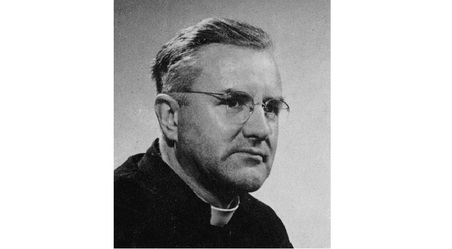
Edward Holloway

The people of God have an identity: in the flesh they are one stock with the Word made flesh; in their spirits they are kindred to the Divine Spirit of the Eternal Word. This is the family likeness to which they are made. And in this way the Son of God is made fully the "Son of Man".Therefore the first unit "on the ground" in the life of the Church is the believing community - the whole family of all ages, types and cultures that is gathered around the man who has very power of being over "the Body and Blood of the Lord". The parish comes first. The real "basic community" must be all committed to the man or team that offers in the family group the Sacrifice of the eternal Covenant and offers them the Bread of Life. There is one common altar on which the everlasting Sacrifice is offered, and through it and through Him we are taken up to the Father, with the Son, in the love of the Holy Spirit. The altar of the New Passover also binds God and men forever in the New Covenant.It is worth remarking that in the sacrament of marriage the groom bears the likeness and ministry of Christ to his bride and she bears the likeness and ministry of the Church to her spouse. The covenant of their union in one flesh, which binds till death do us part, is directly related to the Covenant by which Christ loves us, redeems us and increases life in us. The vocation of Christian spouses is a direct sharing with Christ in that creative and redemptive work. It is a vocation and a covenant which is gathered up into His covenant at Mass. A pity we hardly or never preach it that way and show Christian marriage as not only a vocation but as an office in the Church.

The House Where Your Glory Dwells

In the Old Testament the presence of God was manifested by the shekinah, the luminous Glory in which God dwelt, and which on occasion descended upon the Temple and covered the Holy of Holies. For this reason I always love those churches where the heart and the eye go straight to the end of the nave, (or the central focus of the "round church"), and finds the tabernacle. This is the real seat of the shekinah the place "where your glory dwells", for the Lord of the shekinah dwells there "in his physical reality" (Paul VI, Encyclical Mysterium Fidei, para 46). It may have to be otherwise in a basilica or great Cathedral where people drift and roam at all times and great ceremonies take place often during the day at the central focus of the Church. But in ordinary town or village it is different.The Lord should not be banished to a hole in the wall. If the Eucharist reserved is really "My Lord and My God" one does not have to labour the reason why. Some object that "He is given for my food, and not for my adoration", but the same objection could have been made in Palestine two thousand years ago. He gave himself "for the life and nourishment of the world", but still for adoration too simply because of who he is. "Before Abraham was, I AM".When a baby sucks at the breast, is it forbidden to look up into its mother's face and smile with love? In the same way how lovely is the church where heart and eye go straight to the tabernacle, which is the true House of God, with walls and the benches rather like the temple and its courts which shrouded the Holy of Holies. It is worth remembering, too, that the tabernacle is "House of God" and "House of Gold" spoken of in prophetic scripture - second in time to Mary, who first was the House of God and the House of Gold without stain of dross.Over the tabernacle - "the House of Bread" (and Bethlehem also means "house of bread") - I like to see a Great Cross throwing its shadow over the tabernacle and the altar of Sacrifice. If, as in one parish I served, the Cross is part of a beautiful window of coloured glass then it is even more effective. Either way, in light or in shade, the shadow of the Cross over Altar and Tabernacle says for ever "do this, in the remembrance of Me". It is lovely when a school is hard by and children bustle noisily in at lunch break and flop with a hurried sign of the cross before the tabernacle. Heart and eye know where to go. There is no hunting for the Lord and no forgetting Him. This is the House of God, here literally The Glory dwells.Surely a church should be warm and welcoming with a human beauty, not stark as a museum and certainly not the Town Hall where births, deaths and marriages are registered and where meetings take place for matters of human concern, as happens in the most trendy parishes, encouraged by trendy liturgists and theological advisers and position papers at the moment. In such an attitude there is little thought for the abiding presence of Christ in the Blessed Sacrament."My House shall be called the House of prayer": so while religious art should be in good taste, surely the main ornamentation should not be surrealist or abstract. Again, there should be statues of Jesus, Mary and Joseph and there should be some colour too. There is dignity and beauty in the natural human face - in little children, generous youth, mothers and fathers and in the serene old age that shines in the beauty of the face "like the golden candlestick before the sanctuary of God" (Eccles 26:22).When children look up to the features of Jesus, Mary, Joseph or saint, they should recognise a human beauty and dignity. Sometimes they see, (if they see anything at all in the empty barns which are many modern churches), emaciated features distorted as if by electrical shock treatment. There may be a place and a proper meaning for such elsewhere, but not in the common house of God.For the building which is the church of the local Catholic Christian community is also a room in the houses and households of every person in the parish, married or single, rich or poor. Let it then be welcoming as is home. Again, because it is a room in the home of every family in the parish, the room moreover where Christ dwells among His people, the parish church must be the centre of the liturgical, spiritual and prayer life of the People of God. It cannot be God's Town Hall. This is the distinction between Catholicism and its replacement, quite unconsciously, by Humanism.

The Teaching in the Temple

Christ taught the people in the Temple; and the parish priest who is president - not because he is chairman of the parish council, but because he bears in his person the eternal character of Christ through that ontological power over the Body and Blood of the Lord - teaches the people in the likeness of Christ. The priest is not a guru nor an instructor in "morality without religion". He is not there to impart, but to feed: "Feed my lambs, feed my sheep."There is a world of difference between a lecturer and a priest. The priest teaches as a disciple who knows his Master in a living love and whose every word and work is to bring men and women to know and love Jesus the Lord, so that through the inner touch of that same Lord they may grow up to fulfilment and joy. Whatever the incidentals of our path, for most of us the desire to be a priest has been rooted in a personal awareness of God in love and joy and a desire to share the same with others. If mothers and fathers rejoice to see their children growing to maturity, sound in wind and limb, so a priest rejoices to see the nobility of the love of God deepening from childhood to adolescence in the "men Thou hast given me". This is the joy and the thrill of the priestly life and there is none other like it. He that can take it, let him take it.Upon the priesthood - because of Christ's work and love for his own, not our personal worth nor for our personal consolation merely - there descends something of the shekinah, the glory of the Lord. How otherwise can it be that at an age when other men and women are retiring, drawing in their horns so to speak and resigning themselves to "declining years" which will be, alas, somewhat more lonely and less full, that it is otherwise for the priest on the parish? Because even in the sixth decade God gives one another bevy of golden boys and girls who love and accept and grow towards God in a special way through the ministry, word, authority and personal love of the priest. Amazing grace, - that "thy youth shall be renewed like the eagle's". The man of God is never alone any more than Christ was alone; for "My Father is always with Me". So also: "My Master is always with Me" and where the Master is, a divine power and attraction is. The lonely priest, one is forced to say, is a man who has lost his way.So in teaching the people we try, to the limits of a limited ability, to teach as Christ did. There is Jesus on the hillside, in simple powerful parable. There is Jesus in the deeper, secret wisdom, the direct giving to know of the kingdom of God" (Luke 8.10) and of St. John the evangelist. There is the also the Jesus of St. Paul, whom even now some find hard to understand - the Jesus who is Lord of the universe and through whose coming, predestined before all ages, the whole cosmos holds together (Colossians 1:12-18).The Jesus revealed to us in the Bible is not only the simple Jesus of the synoptic gospels. The full majesty of him found in the teachings of John and Paul also belong to the entire vision of revelation. In every age of the Church the face of Jesus, literally Divine, must shine out to his people and must carry conviction. In this age there must be the proper development that will reveal the relevant face of Jesus - Jesus the creator of wisdom, science and power.Youth at school and college must see the sweep of God's work in the Old Covenant and in the New. They must be enabled to see it woven into the wisdom embodied in the very structure of creation. This is the scientific wisdom which man has inherited for good or for fearful destruction in our own day. Our perception of the divine and the human face of Jesus must deepen with the centuries, his message ever more meaningful and relevant as men inherit his power. It is much the same when a child grows up knowing and loving a deep and holy human genius. Love and appreciation grows with the years and ability to understand. It is not that Christ changes, rather that we slowly come to understand the "many things I have to tell you, but you cannot bear them now."Such a teaching must be certain, firm, full and divine. It must be a total Catholic Christianity, not a vague generic "Christian" faith that in avoiding the specifically Catholic erodes the divinity of Christ and the very attraction of Christ. Priests and Religious, parents and teachers, we cannot bring men and women to know God and to love Him unless our own personalities radiate a warm, vibrant confidence in Jesus known, possessed and fully loved. This requires a full, total conviction of all that Christ's Divinity means through human history, and we cannot pass it on unless we experience the Master in faith, hope and love. If we don't experience, we are lecturers and not disciples.

Liturgy of the People of God

The Liturgy of the Mass can be more beautiful because the priest now faces the people. Whatever some people may have secretly intended, the Mass facing the people need not de-sacralize the liturgy of the Eucharist. Facing the People emphasizes more the priestly character of the priest in the character of Jesus at the Last Supper, the manner in which he is among the brethren as Christ was among the Twelve. It can deepen the identification of the priestly character with that of Christ, because it better emphasizes how "he always loved those who were his own in the world. When the time came for Him to be glorified by You, his heavenly Father, he showed the depth of his love, he took bread, said the blessing, broke the bread and gave it to his disciples … ".Let the priest sink his own personality, in humble love and thanksgiving for his call, into the personality of Him who sustains him and makes him "meaningful and relevant" among men. That way he will never distract the people by the intrusion of his own foibles and imperfections upon their reverent participation in the Holy Eucharist. Whatever a man's colour, culture or accent, a total union with Christ in mind and heart will cause his personality to radiate reverence and draw all men to the Body and Blood of the Lord. Music at Mass may indeed be lighter and more upbeat on occasion - but let us beware. From the age of ten you can hear boys and girls - but especially boys - mimicking the pretty, tinny little tunes and repetitive themes that may be suitable at seven, but which already by ten years of age are contempt for religion. They need meat and not simply milk or candyfloss. The people also need a music which, while it moves and stirs, also induces a strong, inner contemplative union with God and reverence for Him. Qualities of merely physical excitement, however much enjoyed at the time, will not deepen that inner growth of spirit, which alone holds young men and women to their faith after the age of thirteen. Music, like teaching in words, must say something and say something beautiful, deep, true and chaste. If the predominant idiom of popular music should be incapable of this development, then create a new music and a new culture. It has been done before; with the grace of God are we less able to achieve and create than our fathers before us?An altar guild should be more than a gaggle of youngsters flapping around "Father". They should be bound to the priests of the parish by a bond of affection and learning that grows into comradeship and, for a few, into discipleship. The service of Christ at the altar is the most natural apprenticeship to the priesthood. Young men give up time, outings and yearned for TV programmes for the love of Jesus. And Jesus is not mean or ungrateful. He often extends a love which says "come, follow Me and I will make you into fishers of men.If the service of the altar belongs properly to the boy, because whether as potential husband or potential priest he shows forth in the Church the physical office of Christ, it does seem to me, though one speaks as one less wise, and always subject to the magistracy of the official Church, that the Offertory Procession and the bringing up of the gifts belongs more properly to the girls and women of the parish. In her sexuality the woman is the Church, both male and female members of the Church, as mankind looks to God to be fulfilled in Christ, and offers its own offertory gift in the womb of Mary, and only through the womanhood of Mary. Mary first offered gifts "which earth has given, and human hands have made" to be transformed into the Body and Blood of God. I like to see the girls present the gifts, and the boys take them with reverence to the hands of the priest. The very chivalry of chaste love shines out for me in this. There is so much undeveloped theology in the sexual order which has been established by God in nature and in the Church, for the incarnation of Christ!

Diversity of Gifts and charisms

The best parish would always be a team mission in the modern world, For oneself the effort to destroy the parish in the sense we have been considering it, - is AntiChrist. But one does agree that the lone priest in the small parish, in which "nothing happens and all is so very dead" is rather a reflection of an agricultural culture in which men, women, and children worked from dawn to dusk. Anything that happened on high days and holidays involved the whole village community around the church, and in days in which the sacred and the the secular have been totally dismembered from each other, there can be left simply a "dormitory parish" in a "dormitory suburb", and the emphasis can indeed be upon sleep! Parishes which were manned, built, and run as are many of the larger parishes administered by Religious Orders, do seem to be the answer, as much for the diocesan clergy as for the religious Orders. Here, the "small group" comes into its own. There can be a multitude of small groups, whether parish or interparochial (like the SVP, various Guilds, groups etc organised on a diocesan or national basis) which cater for prayer, study, apostolic formation, visiting of the lonely, the sick, the lapsed: for catechesis, and for professional and community interests. Where a parish had the facilities, the halls, recreation and social centres, even the tennis courts and swimming pools (one does not envisage golf courses in England) it could offer an integrated Catholic life in which the small groups supported and enlivened the whole life of the parish as a total comrnuiiity. So many facilities, library and electronic, could be brought under one roof. At present only the larger Religious Congregations can even dare think of such things. Should, therefore, the life of the diocese in the secular clergy move nearer towards the organisation of Oratories as Newman envisaged them? Was that saintly man a prophet in this respect also? Would such an organisation of parish centres, with lesser satellite parishes or chapels of-ease surrounding, be nearer to the highly successful organisation of the Church in the City-States of Roman and medieval towns? Did not the great Monasteries and their "scholae publicae" fulfil just such a vocation, among men, not among verdant fields: should we be thinking that way again? If we do, there will be even more place and need for priestly celibacy, for the total giving of self in the likeness of the flesh of Christ. This again, was how the Fathers saw the meaning of the vow of chastity, in the priest or in the religious brother and sister.

Lastly, since such an apostolate would need a total unanimity of mind and heart, and a deep conviction of the truth of the full and official faith of the Church, are existing seminaries and institutes now capable of fulfilling that need, in their present disarray? Do we need, as some seem to think, new Oratories of Diocesan Priests, a variant of a new order, similar again to Newman's Oratory, or to the Oblates of St. Charles, so that team leaders could form their own members and vocations as did the Jesuits, and as did so many Congregations of priests and nuns at the time of the Reformation? Do we need such again? It is indeed a time for building, but only on foundations of prayer and deep thought. There re many things to pray and ponder about around the title "people of God". But the challenge is a joy, for life is an adventure and should be lived as such. If sanctity is the supreme adventure of life, let us pray the Lord of sanctity for guidance, guidance upon the theme of His people, - The People of God.