



Articles
Eucharist

At The Close Of The Great Jubilee

Editorial FAITH Magazine January-February 2001

First, The Good News

This Holy Year, the Great Jubilee of the Year 2000, has been extraordinary in every sense. The reader in the United Kingdom may be surprised by this. Despite the rise and fall of the Dome, the delays surrounding the erection of the London Eye and the farcical opening of the Millennium Bridge on the Thames, the year just seems like any other year.Nothing else noteworthy seems to have taken place. However elsewhere in the world a good deal has been happening. In Rome the Holy Year has been celebrated with an almost breathless energy, with crowds of people from different countries and backgrounds making the pilgrimage there. Many went to attend one of the numerous special events planned throughout the year.In August the largest crowd in European history gathered to celebrate the Jubilee with the Pope: all of them young people, wishing to draw closer to Christ. The Pope made a visit to the Holy Land that stunned the world: how he acted in Israel was nothing less than historic. In November he managed to convoke a major gathering of politicians in Rome; during the event he named the English martyr St. Thomas More as patron saint of politicians.These are but a few examples. Elsewhere there has been a huge increase in confessions. In some countries the year has seen a large surge in vocations: South Africa, for example, now now hundreds of applicants and seminarians whereas previously the numbers had seemed far less promising. 

The Word who is life

In the United Kingdom however most of this has passed us by. Our media has shown its usual cold silence towards the "good news" of the Church, only reporting scandals and problems that are nothing new to the history of the Church, nor indeed of mankind.It is a cold silence because it finds its roots in the lifeless agenda that our culture seeks to offer to our people. We all feel its jaded quality: the wearisome round of arguments in politics, the sordid scandals which elicit an equally sordid fascination and relish in the media, the exclusive revelations about the life style of some pop star or footballer. None of this is life-giving.In St. John's Gospel we are told that in the person of the Word "there was life, and that life was the light of men" (Jn 1:4). The fact that words, all of which by nature are a reflection of the Eternal Word Himself who became flesh, are used in our media in a manner so at odds with their true glory, used in so useless a fashion, is perhaps the greatest tragedy of all.The Holy Year has been a marvellous opportunity to come into contact with "the Word who is life" (1 Jn 1:1). Many have experienced a real liberation and growth in grace over this period. In response to the Pope's call many countries have sought to ameliorate the debt crisis that has burdened developing and under developed countries. In other places, in direct response to the Pope's own pleas, the situation of many prisoners has improved, with some even being released as a clear manifestation of the liberation that accompanies any Jubilee.

General absolution?

Prior to the Jubilee many voiced a desire that the principle of "release" could also be applied more widely in the Church itself. There was an attempt to have approved a grand, nationwide service of general absolution, which, thankfully, Rome refused.Those of us who have seen general absolution at first hand were alarmed, for it has not brought huge numbers of people back to the Church, as is often claimed. It has, in fact, destroyed in people a sense of the need for the sacrament and made many resentful of the notion that sins ought to be confessed.General absolution actually supports a magical view of the sacraments: a bit of hand waving and everything is alright again, with no personal involvement, no attempt to resolve weighty matters of conscience, no attempt to face the real burden of one’s sins. It makes the sacrament even more impersonal.If we want to help people to have a more serious and adult way of approaching the sacrament then we need to help them overcome their fear. This sacrament of reconciliation can be presented in a more positive way: it really is life-giving and it can be the source of a most wonderful peace of heart and mind, a work of the healing power of Christ. In this light it responds to a deep need of the human heart: to resolve a situation by confronting it, naming it so as to accept it or overcome it.A row between husband and wife can only be resolved when one or both of them accepts where they are wrong and seeks forgiveness: it is not enough to say, "I am sorry generally for everything bad I have done, but I am not going to admit anything to you in particular!" Only when the person says, "I am sorry for this and this," can forgiveness flow; this is because the refusal to say what I am sorry for is a sign that I am not really sorry for it at all. But when this is done, when the burden of past misdeeds is faced, then the sense of relief at the untying (absolution) of this burden is tangible.

 Divorce and re-marriage

Another proposal for the Great Jubilee was to have an amnesty for all the divorced and remarried who are not permitted to receive Holy Communion. It was argued that these are precisely the kind of people whom Christ would seek out: they are the outcasts, the tax-collectors whom Christ does not want to exclude. He would dine with them. So too we should invite them to the Eucharistic banquet. An amnesty for them all would be a sign of the genuine inclusive love of Christ.There are few of us who are unaware of the situation of the divorced and remarried in our parishes. Many priests know couples in this situation who abide by the Church's teaching and do not come to Holy Communion. They often show great generousity of heart and deep faith, even though it is a source of real pain that they cannot receive Christ. In a way their sense of suffering is a real testimony to the value of this sacrament: it is the most precious form of communion with God because it is Christ Himself who is present.This proposal was never implemented. One can see why. To admit the very concept of an amnesty is to admit that there is something wrong with divorce and remarriage. After all, an amnesty is really a release from punishment and a pardon for crimes committed. There are many among those who asked for this amnesty who do not believe that remarriage after divorce is against the Christian life at all. 

Marriage itself at stake

For them the proposal was really just a ruse, a step towards obtaining a radical reversal of the Church's teaching. They know that the granting of the request would logically have to move in that direction. It would be absurd to say that such a thing would be possible in the Year 2000 and then absolutely impossible in 2001. The amnesty would open a door that would be too difficult to close.A perpetual amnesty would need a lot of theological tongue-twisting to justify it, and sometimes it is more rational to simplify the entire argument: one would have to say that there would no longer be any theological reason to prevent those who are divorced and remarried receiving Holy Communion. From this it would be plausible to begin blessing the unions of those who are in this situation since the second marriage is de facto in no way sinful.This, in turn, would lead to an unravelling of the whole of the Church's teaching on marriage. Other issues would be affected too. If the Church could have been wrong on such an important issue, after insisting for centuries otherwise, who is to say that she cannot be wrong about other matters: for example, contraception, abortion, homosexuality, adultery or the need for any form of marriage at all. There are those who would be happy to see this happen.However, with no moral compass at all we are left adrift in a Church and a world where anything is possible: there is no objective moral order, no clear divine teaching from Christ, only a profoundly subjective notion of conscience, which becomes, not an instrument to help the individual do what is right and avoid what is evil, but the actual arbiter of what is good and evil for the person involved.The temptation involved here is perennial: it is described aptly in Genesis 3 as the primal temptation by which the devil lured the first human beings away from God: "you will be like God Himself, knowing both good evil," that is, deciding for yourself what you want to be good and what you want to be evil. As Adam and Eve discovered, none of this is life giving. It needs to be stated therefore that this initiative would have been in the deepest sense unpastoral. To say this may at first sight offend those who wanted such an amnesty. They believed that this would be a caring solution, bringing people back from exclusion to inclusion, which they claim is what Jesus was all about. At this point we must tread carefully. Jesus was not about trying to be inclusive. The notion of inclusivity implies that everything, absolutely everything, can be embraced within the Church and any exclusion is in itself something bad. However Jesus was never inclusive in this sense. His words to the pharisees and scribes point in exactly the opposite direction.

 My song is of mercy and justice

There are some attitudes that have to be excluded from the Kingdom: hypocrisy, greed, abuse of power, to name a few. Indeed sin itself is not to be included. The sinner is sought out by Jesus not so that he can enter the Kingdom and in no way try to change whatever in his life is tarnished by sin: rather he must repent, change his life, and believe in the good news of the grace and mercy of God. To cling to sin, to refuse to change one's life risks hell itself (Mt 5:27-30).When Jesus comes across a sinner He wins them over so that they can leave behind their past life and find new life and mercy in Him. No sin is an absolute obstacle to this great Jubilee of God's mercy no matter how terrible or heinous it may be. The woman caught in adultery (Jn 8:1-11) is not told by Jesus that she can carry on with her adultery: this would be the inclusive thing to do. No, His mercy is real, but so are its implications: "Go and sin no more." 

The word of the Lord concerning divorce

In this debate concerning such an amnesty we find again the need to preach holiness as a real option in life and that this requires a repentance that is in no way superficial but involves a true change of life. The preaching of our Gospel is designed to liberate us from sin. It is not designed to leave us in sin's death-filled grip. Jesus came to give us life and there are some actions, some states of life that are in contradiction to this new life. According to the Gospels, remarriage after divorce is one of them.The so-called Matthean exception ("I tell you, if a man divorces his wife - I am not speaking of fornication [porneia]- and marries another, he is guilt of adultery [moichatai]" (Mt 19:9)) is hotly disputed by many scholars. What does porneia mean? It certainly cannot mean adultery since the actual word for adultery (moicheia) is used to describe remarriage after divorce. That it should mean fornication makes no sense since any infidelity to the marriage bond is in itself adultery: fornication describes the sexual activity for someone who is in no way bound by marriage. According to many scholars, it would make more sense to presume that what Jesus is doing here is to forbid marriage within certain degrees of family relationship: hence a divorce in this case would really be the declaration that no marriage could exist between blood members of a family.Whatever the arguments concerning this fragment of scripture, it is clear that from the earliest times the witness of Christianity was to forbid remarriage after divorce. Divorce was not seen as something positive in itself. The practice of the Orthodox which allows remarriage seems to be more an accommodation with the lax standards of Imperial life in the Eastern Empire than any fidelity to a more ancient tradition. The older tradition sought to preserve the value and integrity of the sacramental marriage bond which no power on earth could undo. "What God has joined together, let no man divide." (Mk 10:9) This has continued to be the practice of the Catholic Church.

 The sacramentality of matrimony

The deeper theological reason for this tradition lies not just in its longevity. It is in not a desire to be cruel to those who go through terrible difficulties and who end up having to face the trauma of divorce. It is based on the reflections of St. Paul on marriage in Ephesians 5: 22-33. Here Paul tells the people of Ephesus that the marriage between a man and wife is in fact a sacramental representation of the relationship that Christ has with the Church. Often it is imagined that when it is stated that Christ and the Church are bridegroom and bride we are really saying that the relationship of Christ and the Church can best be compared to that of marriage.In fact it is quite the reverse: it is the marriage bond between Christ and the Church that is the full reality of which every other marriage is the symbol and image. The kind of love that a man and woman need to have is the love that Christ and the Church have for each other. "Love one another as I have loved you," says Jesus (Jn 15:12). This love between the Lamb and the Church becomes the very centre piece of the end of time as described in the Book of Revelations: "The marriage of the Lamb has come. His bride is ready…Happy are those who are invited to the wedding feast of the Lamb." (Rev 19:7,8,9)This relationship between Christ and the Church is foundational for the Christian life. It is the source of vitality for every sacrament. From it flows life for every believer. This life is based on the generous love of Christ who "loved the Church so much that He sacrificed Himself for her" (Eph 5:25). The Church responds to this sacrificial love of Christ by making of herself an offering to Him, which basically means that she loves him in return (Eph 5:24): this love is symbolised in the Book of Revelation by the fact the Church is dressed in fine linen, bright and pure, which we are told "is the righteous deeds of the saints" (Rev 19:8).This bond can never therefore be broken. Here love is much more than just a feeling. It is the offering of a whole life. Jesus' love for us is one that will never diminish or be revoked because it is embodied and revealed in the sacrifice He made for us, a sacrifice that lives for ever with Him in heaven, a sacrifice that is the living expression of who He is for us. To imagine that this love could be changed or could cease would be for Christ to be no longer Himself. It would empty the cross of its power to save. It would mean that no love is ever possible in a broken world.

 The faithfulness and mercy of God

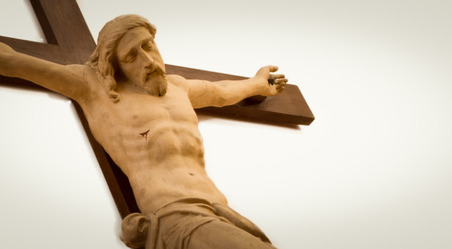
What this means positively is that the bond of life that exists between Christ and the Church is so total that it is the source of all our hope and trust in God's mercy and goodness towards us. It tells us that it really is possible to live and love as Christ did. Each of us can love completely until death, but this is only possible because of Christ's power, the power of His death and resurrection, living within us.Because every sacramental marriage is a representation of the everlasting marriage of the Lamb and His bride the Church, there is no power that can dissolve it. Any attempt to bless a further union is a profound contradiction of the union of Christ and the Church. By its very nature such a blessing is really a denial of Christ's faithful love. In no way could it ever express the absolute and enduring fidelity of Christ to the Church, to each of us, despite our sinfulness.To advocate an amnesty for people in this situation is therefore to fail to see why divorce and remarriage goes against the heart of Christianity. It is not an unloving, heartless reaction on the part of the Church. It is precisely because the Church understands what marriage is really all about - because she saw it on the Cross and experiences it daily in the love Jesus shows to the Church - that she has to reject such an initiative.In doing this she is witnessing to the power of love, indeed protecting it, in a world where love does often grow cold, where the selfishness and cynicism of sin seem to deaden hearts that tasted, albeit briefly, the sweet joys of love. In such a world the true vision of marriage needs to be protected and promoted. 

The true compassion of the Church

The proposed amnesty was really a reflection of a deep divide in the Church not solely on this particular question but on the very essentials of our Faith. Fortunately Rome did not assent to this proposal. It understood that the Great Jubilee was precisely not the time to diminish the value of marriage through misconceived amnesties but rather a God-given opportunity to state the following once more: "Neither death nor life, nor angels, nor principalities, nothing that exists, nothing still to come, nor any power, nor the heights nor the depths, nor any created thing, can ever come between us and the love of God, made visible to us in Christ Jesus our Lord." (Romans 8:38-39) 

If we deny the indissolubility of marriage, then we deny this as well.