



Ideas
Opened Catechism

Revelation And The Grace Of God (from the Catechism)

The Divine Plan of Revelation. Preparing for the One who is to come

Despite sin, God’s Revelation continues and redemption is promised
This covenant was not broken off by our first parents’ sin. After the fall, God buoyed them up with the hope of salvation, by promising redemption; and he has never ceased to show his solicitude for the human race. For he wishes to give eternal life to all those who seek salvation by patience in well-doing.

"Even when he disobeyed you and lost your friendship
you did not abandon him to the power of death...Again and again you offered a covenant to man." (Eucharistic Prayer 4) (55)

The covenant with Noah
After the unity of the human race was shattered by sin God at once sought to save humanity part by part. The covenant with Noah gives expression to the principle of the divine economy toward the ‘nations’, in other words, towards men grouped "in their lands, each with [its] own language, by their families, in their nations." (Gen 10:5) (56)

The covenant with Noah remains in force during the times of the Gentiles, until the universal proclamation of the Gospel. The Bible venerates several great figures among the Gentiles: Abel the just, the king-priest Melchisedek - a figure of Christ - and the upright ‘Noah, Daniel, and Job’. Scripture thus expresses the heights of sanctity that can be reached by those who live according to the covenant with Noah waiting for Christ "to gather into one the children of God who are scattered abroad." (Jn 11:52) (58)
God chooses Abraham
In order to gather scattered humanity God calls Abram from his country, his kindred and his father’s house, and makes him Abraham, that is, "the father of a multitude of nations". "In you all the nations of the earth shall be blessed." (Gen 17:5; 12:3) (59)

Against all human hope, God promises descendants to Abraham, as the fruit of faith and of the power of the Holy Spirit. In Abraham’s progeny all the nations of the earth will be blessed. This progeny will be Christ himself, in whom the outpouring of the Holy Spirit will "gather into one the scattered children of God who are scattered abroad." (Jn 11:52). God commits himself by his own solemn oath to giving his beloved Son and "the promised Holy Spirit...who is the guarantee of our inheritance until we acquire possession of it." (Eph 1:13-14) (706)

The people descended from Abraham would be the trustee of the promise made to the patriarchs, the chosen people, called to prepare for that day when God would gather all his children into the unity of the Church. They would be the root on to which the Gentiles would be grafted, once they came to believe. (60)
God forms his people Israel - the covenant with Moses
After the Patriarchs, God formed Israel as his people by freeing them from slavery in Egypt. He establishes with them the covenant of Mount Sinai and, through Moses, gave them his law so that they would recognise him and serve him as the one living and true God, the provident Father and just judge, and so that they would look for the promised Saviour. (62)

Israel is the priestly people of God, ‘called by the name of the Lord’, and ‘the first to hear the word of God’, the people of the ‘elder brethren’ in the faith of Abraham. (Roman Liturgy, Good Friday) (63)
Through the prophets, God forms his people in the expectation of a new and everlasting covenant
Through the prophets, God forms his people in the hope of salvation, in the expectation of a new and everlasting Covenant intended for all, to be written in their hearts. The prophets proclaim a radical redemption of the People of God, purification from their infidelities, a salvation which will include all the nations.

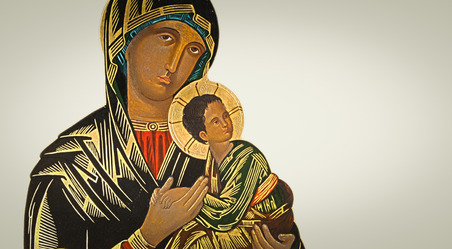
Above all, the poor and humble of the Lord will bear this hope. Such holy women as Sarah, Rebecca, Rachel, Miriam, Deborah, Hannah, Judith and Esther kept alive the hope of Israel’s salvation. The purest figure among them is Mary. (64)
Over the centuries everything is to prepare for the coming of God’s Son
The coming of God’s Son to earth is an event of such immensity that God willed to prepare for it over the centuries. he makes everything converge on Christ: all the rituals and sacrifices, figures and symbols of the First Covenant. He announces him through the mouths of the prophets who succeeded one another in Israel. Moreover, he awakens in the hearts of the pagans a dim expectation of his coming. (522)

"Behold I am doing a new thing." (Is 43:19) Two prophetic lines were to develop, one leading to the expectation of the Messiah, the other pointing to the announcement of a new Spirit. They converge in the small Remnant, the people of the poor, who await in hope the "consolation of Israel" and the "redemption of Jerusalem." (Zeph 2:3; Lk 2:25,38) (711) In brief - By love, God has revealed himself and given himself to man. He has thus provided the definitive, superabundant answer to the questions that man asks himself about the meaning and purpose of life. (68)
God has revealed himself to man gradually communicating his own mystery in deeds and words. (69)
Beyond the witness to himself that God gives in created things, he manifested himself to our first parents, spoke to them and, after the fall, promised them salvation (cf. Gen 3:15) and offered them his covenant. (70)
God made an everlasting covenant with Noah and with all living beings (cf. Gen 9:16). It will remain in force as long as the world lasts. (71)
God chose Abraham and made a covenant with him and his descendants. By the covenant God formed his people and revealed his law to them through Moses. Through the prophets, he prepared them to accept the salvation destined for all humanity. (72)
The Greatest and Last of All the Prophets

St John the Baptist
St John the Baptist is the Lord’s immediate precursor or forerunner, sent to prepare his way. "Prophet of the Most High", John surpasses all the prophets, of whom he is the last. He inaugurates the Gospel, already from his mother’s womb welcomes the coming of Christ, and rejoices in being "the friend of the bridegroom", whom he points out as "the Lamb of God who takes away the sin of the world." Going before Jesus "in the spirit and power of Elijah", John bears witness to Christ by his preaching, by his Baptism of conversion, and through his martyrdom. (523)
The Woman Prepared before the Foundation of the World

From all eternity God chose a mother for his Son
"God sent forth his Son" (Gal 4:4), but to prepare a body for him, he wanted the free co-operation of a creature. For this, from all eternity God chose for a mother of his Son a daughter of Israel, a young Jewish woman of Nazareth in Galilee, "a virgin betrothed too a man whose name was Joseph, of the house of David; and the virgin’s name was Mary." (Lk 1:26-27) (488)
Mary is the masterwork of the mission of the Son and the Spirit
The Father blessed Mary more than any other created person "in Christ with every spiritual blessing in the heavenly places" and chose her "in Christ before the foundation of the world, to be holy and blameless before him in love." (cf. Eph 1:3-4) (492)

Mary, the all-holy ever-virgin Mother of God, is the masterwork of the mission of the Son and the Spirit in the fullness of time. For the first time in the plan of salvation and because his Spirit had prepared her, the Father found the dwelling-place where his Son and his Spirit could dwell among men. (721)
Christ Jesus - Mediator and Fullness of Revelation

In the fullness of time, God fulfils the promise to Abraham and sends his own Son
"But when the fullness of time had come God sent forth his Son, born of a woman, born under the law, to redeem those who were under the law, so that we might receive adoption as sons." (Gal 4:4-5) This is the "Gospel of Jesus Christ, the Son of God" (Mk 1:1): God has visited his people. He has fulfilled the promise made to Abraham and his descendants. he acted far beyond all expectation - he has sent his own ‘beloved Son’. (422)
God has said everything in his Word
"In many and various ways God spoke of old to our fathers by the prophets, but in these last days he has spoken to us by a Son". (Heb 1:1-2) Christ, the Son of God made man, is the Father’s one perfect and unsurpassable Word. In him he has said everything; there will be no other word than this one. St John of the Cross, among others, commented strikingly on Hebrews 1:1-2:

"In giving us his Son, his only Word (for he possesses no other), he spoke everything to us in this sole Word - and he has no more to say...because what he spoke before to the prophets in parts, he has now spoken all at once by giving us the All Who is His Son. Any person questioning God or desiring some vision or revelation would be guilty not only of foolish behaviour but also of offending him, by not fixing his eyes entirely upon Christ and by living with the desire for some other novelty." (65) In brief - In the fullness of time the Holy Spirit completes in Mary all the preparations for Christ’s coming among the People of God. By the action of the Holy Spirit in her, the Father gives the world Emmanuel, ‘God with us’. (744)
God has revealed himself fully by sending his own Son, in whom he has established his covenant for ever. The Son is his Father’s definitive Word; so there will be no further Revelation after him. (73)
God Reveals His Plan of Loving Goodness

From reason to divine revelation
By natural reason man can know God with certainty, on the basis of his works. But there is another order of knowledge, which man cannot possibly arrive at by his own powers: the order of divine Revelation. Through an utterly free decision, God has revealed himself and given himself to man. this he does by revealing the mystery, his plan of loving goodness, formed from all eternity in Christ, for the benefit of all men. God has fully revealed this plan by sending us his beloved Son, our Lord Jesus Christ, and the Holy Spirit. (50)
God reveals his plan gradually
The divine plan of Revelation is realised simultaneously ‘by deeds and words which are intrinsically bound up with each other’ (Vat 2, DV 2) and shed light on each other. It involves a specific divine pedagogy: God communicates himself to man gradually. He prepares him to welcome by stages the supernatural Revelation that is to culminate in the person and mission of the incarnate Word, Jesus Christ.
St Irenaeus of Lyons repeatedly speaks of this divine pedagogy using the image of God and man becoming accustomed to one another: The Word of God dwelt in man and became the Son of man in order to accustom man to perceive God and to accustom God to dwell in man, according to the Father’s pleasure. (53)

The Stages of Revelation - Salvation History

In the beginning God makes himself known - man is called to communion with God
God, who creates and conserves all things by his Word, provides men with constant evidence of himself in created realities. And furthermore, wishing to open up the way to heavenly salvation, he manifested himself to our first parents from the very beginning. He invited them to intimate communion with himself and clothed them with resplendent grace and justice. (54)