


The Wound Of Sin: Original And Personal (from the Catechism)
Man's First Sin
The reality of sin - it breaks the profound relationship of man to God
Sin is present in human history; any attempt to ignore it or to give this dark reality other names would be futile. To try to understand what sin is, one must first recognise the profound relation of man to God, for only in this relationship is the evil of sin unmasked in its true identity as humanity’s rejection of God and opposition to him, even as it continues to weigh heavy on human life and history. (386)
Only Revelation clarifies the reality of sin, which is not just a psychological flaw
Only the light of divine Revelation clarifies the reality of sin and particularly of the sin committed at mankind’s origins. Without the knowledge Revelation gives of God we cannot recognise sin clearly and are tempted to explain it as merely a developmental flaw, a psychological weakness, a mistake, or a necessary consequence of an inadequate social structure etc. Only in the knowledge of God’s plan for man can we grasp that sin is an abuse of the freedom that God gives to created persons so that they are capable of loving him and loving one another. (387)
We cannot tamper with the revelation of original sin without undermining the mystery of Christ
The doctrine of original sin is, so to speak, the ‘reverse side’ of the Good News that Jesus is Saviour of all men, that all need salvation and that salvation is offered to all through Christ. The Church, which has the mind of Christ, knows very well that we cannot tamper with the revelation of original sin without undermining the mystery of Christ. (389)
A primeval event at the beginning of the history of man
The account of the fall in Genesis 3 uses figurative language, but affirms a primeval event, a deed that took place at the beginning of the history of man. Revelation gives us the certainty of faith that the whole of human history is marked by the original fault committed by our first parents. (390)
Freedom put to the test
God created man in his image and established him in his friendship. A spiritual creature, man can live this friendship only in free submission to God. The prohibition against eating "of the tree of the knowledge of good and evil" spells this out: "for in the day that you eat of it you shall die". The "tree of the knowledge of good and evil" symbolically evokes the insurmountable limits that man, being a creature, must freely recognise and respect with trust. Man is dependent on his Creator, and subject to the laws of creation and to the moral norms that govern the use of freedom. (396)
Disobedience to God
Man, tempted by the devil, let his trust in his Creator die in his heart and, abusing his freedom, disobeyed God’s command. This is what man’s first sin consisted of. All subsequent sin would be disobedience toward God and lack of trust in his goodness. (397)
Seduced by the devil, man preferred himself to God
In that sin man preferred himself to God and by that very act scorned him. He chose himself over and against God, against the requirements of his creaturely status and therefore against his own good. Created in a state of holiness, man was destined to be fully ‘divinized’ by God in glory. Seduced by the devil, he wanted to "be like God", but "without God, before God, and not in accordance with God" (St Maximus the Confessor) (398)
The tragic consequences of this sin
Scripture portrays the tragic consequences of this first disobedience. Adam and Eve immediately lose the grace of original holiness. They become afraid of God of whom they have conceived a distorted image - that of a God jealous of his prerogatives. (399)
The harmony is broken- in man, between man and woman, with creation - and death enters human history
The harmony in which they had found themselves, thanks to original justice, is now destroyed: the control of the soul’s spiritual faculties over the body is shattered; the union of man and woman becomes subject to tensions, their relations henceforth marked by lust and domination. Harmony with creation is broken: the visible creation has become alien and hostile to man. Because of man, creation is now subject "to its bondage to decay" (Rom 8:21). Finally, the consequence explicitly foretold for this disobedience will come true: man will "return to the ground", for out of it he was taken. Death makes its entrance into human history. (400)
In brief - By his sin Adam, as the first man, lost the original holiness and justice he had received from God, not only for himself but for all human beings. (416)
The Consequences for Humanity
We are all afflicted with Adam’s sin
Following St Paul, the Church has always taught that the overwhelming misery which oppresses men and their inclination towards evil and death cannot be understood apart from their connection with Adam’s sin and the fact that he has transmitted to us a sin with which we are all born afflicted, a sin which is the ‘death of the soul’. Because of this certainty of faith, the Church baptises for the remission of sins even tiny infants who have not committed personal sin. (403)
The personal sin of Adam and Eve affected human nature which is transmitted in a fallen state to all of us
How did the sin of Adam become the sin of all his descendants? The whole human race is in Adam ‘as one body of man’. By the ‘unity of the human race’ all men are implicated in Adam’s sin, as all are implicated in Christ’s justice. Still, the transmission of original sin is a mystery that we cannot fully understand. But we do know by Revelation that Adam had received original holiness and justice not for himself alone, but for all human nature. By yielding to the tempter, Adam and Eve committed a personal sin but this sin affected the human nature that they would then transmit in a fallen state. It is a sin which will be transmitted by propagation to all mankind, that is, by the transmission of human nature deprived of original holiness and justice. And that is why original sin is called ‘sin’ only in an analogical sense: it is a sin ‘contracted’ and not ‘committed’ - a state and not an act. (404)
The effects of original sin in us - human nature is wounded, subject to concupiscence, and death
Although it is proper to each individual, original sin does not have the character of a personal fault in any of Adam’s descendants. It is a deprivation of original holiness and justice, but human nature has not been totally corrupted: it is wounded in the natural powers proper to it, subject to ignorance, suffering and the dominion of death, and inclined to sin - an inclination to evil that is called ‘concupiscence’. Baptism, by imparting the life of Christ’s grace, erases original sin and turns a man back towards God, but the consequences for nature, weakened and inclined to evil, persist in man and summon him to spiritual battle. (405)
In brief - Adam and Eve transmitted to their descendants human nature wounded by their own first sin and hence deprived of original holiness and justice; this deprivation is called ‘original sin’. (417)
As a result of original sin, human nature is weakened in its powers, subject to ignorance, suffering and the domination of death, and inclined to sin (this inclination is called ‘concupiscence’). (418)
A New Adam and a New Eve
After the original sin - the ‘First Gospel’, the promise of a Redeemer
After his fall, man was not abandoned by God. On the contrary, God calls him and in a mysterious way heralds the coming victory over evil and his restoration from his fall (cf. Gen 3:9,15). This passage in Genesis is called the Protoevangelium (‘first gospel’): the first announcement of the Messiah and Redeemer, of a battle between the serpent and the Woman, and of the final victory of a descendant of hers. (410)
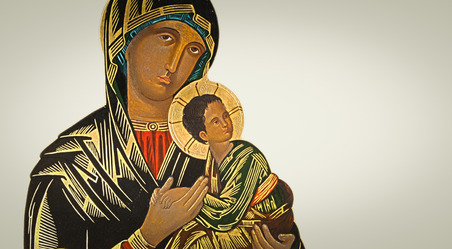
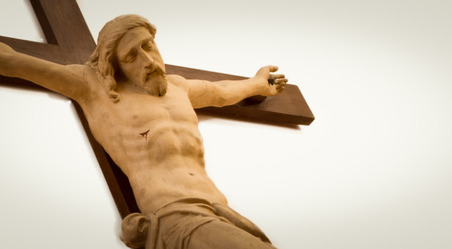
The Christian tradition sees in this passage an announcement of the ‘New Adam’ who, because he "became obedient unto death, even death on a cross" (Phil 2:8), makes amends superabundantly for the disobedience of Adam. Furthermore many Fathers and Doctors of the Church have seen the woman announced in the ‘Protoevengelium’ as Mary, the mother of Christ, the ‘New Eve’. Mary benefited first of all and uniquely from Christ’s victory over sin: she was preserved from all stain of original sin and by a special grace of God committed no sin of any kind during her whole earthly life. (411)
In brief - Christians believe that ‘the world has been established and kept in being by the Creator’s love; has fallen into slavery to sin but has been set free by Christ, crucified and risen, to break the power of the evil one...’ (421)
Man in Paradise
The harmony and friendship with God before sin
The first man was not only created good, but was also established in friendship with his Creator and in harmony with himself and with creation around him, in a state that would be surpassed only by the glory of the new creation in Christ. (374)
The original state of holiness and justice
The Church, interpreting the symbolism of biblical language in an authentic way, in the light of the New Testament and Tradition, teaches that our first parents, Adam and Eve, were constituted in an original ‘state of holiness and justice’. This grace of original holiness was ‘to share...in divine life’. (375)
The inner harmony of the human person - no human suffering or death
By the radiance of this grace all dimensions of man’s life were confirmed. As long as he remained in the divine intimacy, man would not have to suffer or die. The inner harmony of the human person, the harmony between man and woman, and finally the harmony between the first couple and all creation, comprised the state called ‘original justice’. (376)
Mastery of self and freedom from triple concupiscence
The ‘mastery’ over the world that God offered man from the beginning was realised above all within man himself: mastery of self. The first man was unimpaired and ordered in his whole being because he was free from the triple concupiscence that subjugates him to the pleasures of the senses, covetousness for earthly goods and self-assertion, contrary to the dictates of reason. (377)
Familiarity with God
The sign of man’s familiarity with God is that God places him in the garden. there he lives to "till it and keep it". Work is not yet a burden, but rather the collaboration of man and woman with God in perfecting the visible creation. (378)
This harmony was lost by the sin of our first parents
The entire harmony of original justice, foreseen for man in God’s plan, will be lost by the sin of our first parents. (379)
In brief - Revelation makes known to us the state of original holiness and justice of man and woman before sin; from their friendship with God flowed the happiness of their existence in paradise. (384)