



Moral and Social Teaching
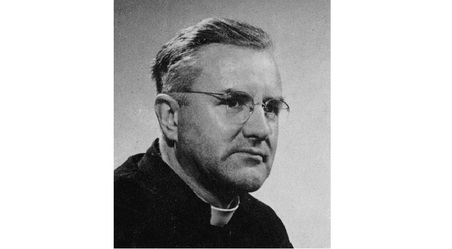
Edward Holloway
This is the Law which must be rightly understood, studied, and lived by the philosopher of Science before he can with truth and good organise the use of the law of matter, living and non-living, around the destinies of man, and the world in which man lives. If the material and its laws is not organised incorrect relationship to this ultimate Law, - the nature of man in its relationship to the nature of God, then the upward surge of that higher Evolution of man, which is the perfection of the individual and of human society through the fullness of God, and the fullness of man’s earthly inheritance, is not possible. Anything else subordinates men, and the community of men, and the environment of men, to the merely animal level, or to the warped vision of human arrogance. This is the scientific crucifixion of man, in the individual, and in the community.It is right in us, most right of all in the young, to see forward the vision splendid of the world which lies within our power; to see the end of ignorance and of disease, the making of the desert to bloom again, the conversion of the enormous resources of scientific wealth away from static, and by analogy we may say lustful engines of war, to the conquest of the natural environment of man, and towards the integration of mankind into one People of all the Earth. This was the vision of God in the beginning, in the origins of man in the one flesh, in Adam, and in the consummation of mankind and of every individual man in the Person of Christ. This oneness of the People of the Earth is the consummation of the Scientific Civilisation, to which the petty nationalism’s and racialism's which divide and frustrate are a sickening and most miserable heresy. To this fulfilment let us bend our minds, our wills and our backs, - but count the cost, and cost the work true.
We have had the music-makers, the seers of visions and the dreamers of dreams always down the ears of history. The burden of Homer, of the myths of the heroes of primitive peoples, the distant legends of the ‘golden age’, and the scientific dreams of men as diverse as Voltaire and H.G. Wells, are all of one pedigree, variants only of one species of human hope. Youth must, and youth ought to frame visions of a Brave New World of its own undertaking, but for Man’s sake, if God is not believed in, seek and know where the dream has failed, for the Myth, pre-scientific or scientific, is the dashed hope of the dreamer, and not all of them are nightmares from the moment of their formulation, some of the dreams ought to have come true.
(New Synthesis pp 347-349.)
HUMAN LOVE and Human Being
The heart of community is the heart of love, and the eyes of love are focused through truth, otherwise love is blind. The subtle sense of security, the joy of belonging which is social community, has its roots first in a sense of belonging and in a sense of man’s own worth. There is no sense of belonging unless behind it there is a certainty of being loved and being wanted. A man is loved and wanted if he has a stake among his brethren. There is no sense of worth unless there exists overall among the brethren who are the ‘society’ a frame of values concerning life which men share and which make life meaningful. There is not a child in the world who doubts that he is worth loving and that he should be loved: to mother and father he is a value beyond all doubt. Why? - well, just by being of course!
The Core of this sense of social belonging is an extension of the relationship of the family group, and extension of the love which defines hearth and home, and it is ontological, it is of being in its ultimate nature. Because the relationship of social intercourse is an extension in its essentials of family relationship, it takes for granted a worth-value which is based upon the love which defines the human personality as it grows and matures. These values which energise and fulfil human love, whether in the family or in friendship are of the one same nature, and they all focus through God and in God they are developed. The values of truth and love which derive from the nature of human love in marriage and which fulfil the home, are values derived from the nature of being in a man not in apes, they are not conventions of human usage and they are certainly not neutral in their relationship to God. Above the merely animal and the merely physical, from God they derive in nature, through union with God in the Spirit of a man they are fulfilled, and in one same order of value and of type they extend to the friend in every order of human life. In its essence, which is spiritual and companionate and not sexual, love is of one common order and type in all human relationships, it differs in degree and in application to vocation, in one vocation uniquely it binds up the sexual with the spiritual unto God, but in its essential nature that spiritual which informs and powers the love of men is the same from the community of comtemplatives, through the degrees of true and honourable friendship, to the basic love arising out of man and woman through which human life comes again into being. God is the same, and human nature is the same, and so true love is the same, but infinite in variety and in degrees of depth, wherever man is found.
(New Synthesis p354.)
Concepts of Ownership and Power in Society
For a long time the concept of ownership has been dominant in the social thought of the modern world. Preoccupation with its problems helped to give birth to Marxism itself, and since the rise of Marxism as a world philosophy, the concept has passed over into a philosophic principle of economic and social evolution. As the word rings upon the mind of an Englishman, ‘ownership’ is too small a term to denote all that is meant by the ‘economic Man’ of at least the earlier thinking of practical Marxism. The issues of ownership in society have not been issues simply of holding land or farms, or being able to be a small craftsman or producer and so forth in a given social milieu. The issues of ownership have been issues of control and power within society, not only over the standard of living of citizens in their relationship to one another, but in terms also of the development of personality, of knowledge, of control and direction by a man of his own life and that of his children. It is a very complex issue indeed, and even today in honest discussion, there is very little appreciation of how wide a connotation needs to be given to this notion of ‘ownership’. Because of the distinct nuances of meaning contained with in the word, it is often quite overlooked that gain of apparent ‘ownership’, of effective control by individuals over the earth as their means of living and personal fulfilment, are counterbalanced by a loss of power and effective control in some other direction of social life, the nature of which is overlooked just because we do not think of it as a form of ‘ownership’.
(New Synthesis p 448.)
Loving in the Image of Christ
It is for modern man to come now with scientific wisdom nearer to the intellect of God in creating, nearer to the awful power of God in doing, to know in a new depth and a new certainty the need for Christ:- God’s wisdom in the world, God’s love in the world, God’s patient redeeming of the damaged in the world. Man, growing ever more terribly powerful in with each decade of time, so obviously beyond all natural environment to control, must conform himself to the wisdom of Christ that his own personal wisdom and power may be deployed in beautiful and creative proportion, not in destruction, nor in the distortion of human nature. Let man seek for and recognise his own personal Law of Life, for man is not his own God, and without God he is the tragic fool of all Nature.With God, despite the lesion of sin man is brought into that perfect Law of liberty which does not make the freedom of the sons of God a cloak for wantonness of flesh or of spirit. This integration of our personal lives with the Environment in which we live, and move, and find our being is the holy communion of God and men of which the Blessed Eucharist is not the symbol but the factual expression in the ontological reality of God and Man. From communion with God there flows peace, and peace of soul is the conscious experience of the love of God. Peace deepens into knowing, the love which is the love of presence, of person unto Person, which indeed is more than the pledge of peace, though the peace itself is more than the world gives unto men in any of its delights.The love of the brethren flows naturally from a man’s own peace of soul. It is more than abstraction; it is not the love of humanity, nor of Humanism, it is the humble love of people as they are. The love of abstractions and of ‘isms’ withdraws to lovely places and ordered quite, it pontificates from ivory towers set among dreaming spires upon the freedoms and fulfilment’s of men, while in fact with sophistry as old as sin it hands them captive to the conceits and cravings which are their pains, and forges the chains of human bondage.The love of men which is begotten in God lives with men in fair and in foul, perseveres with them through all their follies, crudities, and lack of love in return. If such a love is fully human, it will rise even to the highest measure of the humanism of Christ; it will leave aside wife and children, becoming fully identified in Fatherhood and in brotherhood, with the ‘men thou gavest me’ as did Christ himself. This is the deeper love of Christ which transcends the organs of generation that their very vocation in human nature may be the better-forwarded in God for time and for eternity. Thus devoted, at the very highest level of human love in the likeness of the humanism of God in Christ, men and women enter more freely upon human lives to transform and to cherish. In a belonging that is unique they enter upon lives more privately than within the marriage bed, not only to love and to foster, but to struggle also and to resist...for our wrestling is not with flesh and blood but with principalities and powers, with spirits of wickedness in high and intellectual places. A man who will identify himself with Jesus Christ in the struggle to defend and to hold the wounded souls of men, and to form them in the image of God, should not encumber himself with lesser loves, the more so since these will often cry out against the price that the dedicated must pay in any age and generation for such a ransoming.So men do not go, they are sent, they should be sent, the committal under obedience and its commission from the above argues a greater love and a more generous dedication than that which depends upon a will that chooses always individually and may withdraw its service at notice. Sent, men must be - to the great wens of industrial man as well as to the lovely cities of mountain and plain. They should go as Christ went, with one consuming vocation, of their own will, but urgently sent of the Father for the one work which defines their vocation and fulfils their urge for love. This is that men may be fulfilled in the joy of Christ, that sons and daughters may be brought forth of their own souls in Christ more fruitfully than of their flesh.
Such love and such a yearning towards men is true Humanism, very realistic, paying the bloody price of human guile, rejection, and hatred of the whole truth, persevering with the flesh and with the spirit of man in season and out of season. This is the Religion of Christ, so it is that the Church survives the persecutions, whatever may have been in any age the follies of spirit and flesh which aided the evil and the arrogant to arraign and to discredit her.
(New Synthesis pp 350- 352.)