



Ideas

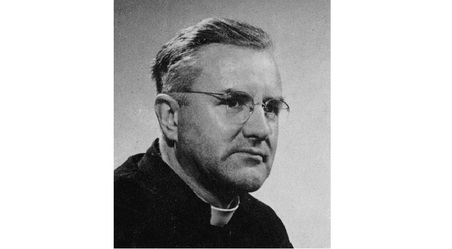
Pope John Paul II

Fides et Ratio - Pope John Paul II

From the Enciclical Letter of Pope John Paul II

The Pope explains why we need to consider further the rational foundations of the Catholic vision:
"… The need for a foundation for personal and communal life becomes all the more pressing at a time when we are faced with the patent inadequacy of perspectives in which in which the ephemeral is affirmed as a value and the possibility of discovering the real meaning of life is cast into doubt. This is why many people stumble through life to the very edge of the abyss without knowing where they are going."(6) "… Life in fact can never be grounded upon doubt, uncertainty or deceit"(28) …"In one way or another, men shape a comprehensive vision and an answer to the question of life's meaning; and in the light of this they interpret their own life's course and regulate their behaviour." (30)
He calls for new insights:

"it is necessary not to abandon … the audacity to forge new paths … willingly to run risks" (56).

"… I make this strong and insistent appeal—not, I trust, untimely—that faith and philosophy recover the profound unity which allows them to stand in harmony with their nature without compromising their mutual autonomy. The parrhesia (assurance) of faith must be matched by the boldness of reason.(48)"

He points out relevant elements of the scriptural vision:

"God alone is the absolute … Man (is) in the image of God, … the immortality of the human soul …. evil stems not from any material deficiency, but … (from) the disordered exercize of human freedom. … Jesus Christ, the Incarnate Word of God, … is the perfect realization of human existence."(80).

He states three basic methodological conditions for the new philosophical development:

It will involve a search for "the ultimate framework of the unity of human knowledge and action, leading them to converge towards a final goal and meaning." (81). It must "verify the human capacity … to come to a knowledge which can reach objective truth…" And it must be "capable of transcending the empirical…" (82). "Hence we face a great challenge at the end of this millennium to move from phenomenon to foundation, a step as necessary as it is urgent." (83)

He gives some foundations for the new development:
34. "This truth, which God reveals to us in Jesus Christ, is not opposed to the truths which philosophy perceives. On the contrary, the two modes of knowledge lead to truth in all its fullness. The unity of truth is a fundamental premise of human reasoning, as the principle of non-contradiction makes clear. Revelation renders this unity certain, showing that the God of creation is also the God of salvation history. It is the one and the same God who establishes and guarantees the intelligibility and reasonableness of the natural order of things upon which scientists confidently depend,(29) and who reveals himself as the Father of our Lord Jesus Christ. This unity of truth, natural and revealed, is embodied in a living and personal way in Christ, as the Apostle reminds us: "Truth is in Jesus" (cf. Eph 4:21; Col 1:15-20). He is the eternal Word in whom all things were created, and he is the incarnate Word who in his entire person (30) reveals the Father (cf. Jn 1:14, 18). What human reason seeks "without knowing it" (cf. Acts 17:23) can be found only through Christ: what is revealed in him is "the full truth" (cf. Jn 1:14-16) of everything which was created in him and through him and which therefore in him finds its fulfillment (cf. Col 1:17)".
In his two documents preparing for the Jubilee Year 2000 his vision is developed further.