


Communion in God: The Identity of the Church
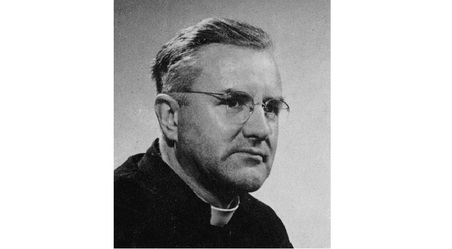
Edward Holloway
"England", said a graffiti scratched on a window of my room at St. Mary's Hall Stonyhurst when a student, "is the paradise of little minds and the purgatory of the great": the attribution was not appended. Whether it is so or not, John Henry Newman was not one who could drift contentedly along with the crowd as folk drift up to the Common to view a Fair - perhaps Vanity Fair - life's own scene. Newman was one of those spirits both blest and cursed, who could tolerate no mediocrity. His piercing intellect, at once analytic but capable of brilliant synthesis, cut through every trace of unconscious humbug, in others but most of all in himself.He had more than mind, he was gifted with a sensitive and loving disposition. The first great formative experience of Christian communion for him was a close and loving family circle. Men like Newman are destined to be cynics or saints; for Newman the compass needle of the Church's judgement is swinging to the greater and much rarer achievement.
Communion as a quality of Loving
At Oxford he developed in the experience of Christian friendship as more than a bond of nature. It became for him and unto others the formative loving of a mutual discipleship in Christ. It is not surprising that after the usual agonizing which marks all the big decisions of his life he offered himself for Holy Order. His parochial and plain sermons need to be read to appreciate the intense personality of the man. He was no mere academic, being too warm and too greatly human to stay beached simply on that strand.It has been many times remarked that Newman did not preach so much as deeply and earnestly converse a meditation to Himself and with his people. It seems to have been at Littlemore, as vicar of St. Mary's, that Newman came to mature both in his profound appreciation of human nature and also in the need for more, in the concept of the Church as a Communion, than he had taken from his Evangelical days and the company of deep and earnest companions among such friends.Newman becomes aware, with a certain alarm, of the conscious and unconscious pride of the human mind and the wilfulness of the fallen will. His letters show us that even in his Oxford days Newman recognised the arrogance of the gifted mind and the power of secularism already threatening the Church of England from the Liberal, rationalistic movement at the universities. On the parish he found in all sorts of conditions of people, especially those who he could recognise as manifestly less spiritually perfect, the same corrosive pride of human opinion set against the word of the Word of God.
Tensions of Orthopraxis and Orthodoxy
It is in his priestly ministry that he begins to question, with some disquiet, that priority of orthopraxis (right doing and living) over orthodoxy (right faith and doctrine), which the Evangelical mind unconsciously presumed. He found himself emphasizing the authority of Christ, the divine authority, to inculcate and to defend the fulness of the Christian inheritance, the Christian tradition. He begins to meditate that church order and church authority, especially episcopal authority, is more than a useful external scaffolding which supports, (but from the outside), the building up of the Church of the Invisible Kingdom - the communion of holy souls, the chosen known only to God.Newman began to see that the emphasis upon orthopraxis - good will - and the minimalizing of orthodoxy - the rule of faith - was in fact the philosophy of the priority of the will over the intellect and that such a path, without the corrective of an authority and an intellect superior to the will of man, would slowly but surely disintegrate the unity and the fulness of Christian truth.Today we are at the very end of that road of personal opinion and personal interpretation of the Mind of God. It has passed beyond the reliance upon one's own opinion of the meaning and worth of the Bible, whether as book or as a tradition. The very being and Divinity of Christ is now subject to a Christian's own evaluation of who He was, what He was and what is the content of the "divine" itself.Today, in all Christian Communions, the emphasis in pastoral life and equally in the liturgical prayers is upon "love"; upon love, courage, service and very rarely upon truth as the Light of God. This was not the emphasis of Jesus Christ. It was the Word - the Personal term of the divine Self Knowledge - who was made flesh and was the Light of the world. Before Pilate too, our Lord's answer to "So you are a King then?" was "Yes: I am a King, for this was I born, this I came into the world that I should give witness to the truth; everyone who belongs to the truth listens to my voice" (John 18.37).It is not only in the non-Catholic Churches that this emphasis upon the truth has been deliberately laid aside. In the pastoral life of the Catholic Church too, there is a weary emphasis upon "love" without any clear identity of the nature and characteristics of Christian loving. It is the ‘Church Horizontal’ without any corrective of the ‘Church Vertical’. A desert is a horizontal landscape and so is the soul of man without the clear delineation of the truths which alone give form, vigour and beauty to Christian love.
Structure and Communion in the Church
Newman, so far ahead of his day, in his thinking as well as the quality of his loving, came to see and to seek always more earnestly the divine, the higher, the transcendent truth which enobled the Christian intellect and gave truth and beauty to Christian love. Such an authority must go beyond the individual; and so the mind of Newman turned to the role of the churches among themselves as a Communion of teaching, of love and of the certain formation of the soul. Almost at once he saw the role of the bishop as the centre of unity, life, witness, truth and love.From his office the bishop must be the centre and guarantor of the truth of Christ. He must be more than that. Newman never saw office in the Church as similar to office in the state or in the military forces. From his very temperament he had learned that Christian care is also a formation in the true and the good. Christian care is to another spirit what the sun is to the earth, a principle of both light and warmth, truth and love. Both must be together. Warmth without light generates growth without form and without fruit. Light that is cold illuminates a landscape, but no seed springs.The bishop to his people must be in a communion of teaching and loving which holds the community of the diocese together. The authority of a parent is derived from his or her position as source and origin of life. A father teaches and loves, but authority is part of the very fruitfulness of both teaching and loving. A priest teaches and loves, but without an authority derived from his ministry of Order there is no final, formative power. A bishop teaches and loves, rules and unites, but without an even greater authority of source as Father in the spirit, he would be no different from any officer of the state or in commercial management.
Rediscovering "The Fathers"
Newman was well aware that it was the life of Christ that lived within the Christian Community, in every aspect from the cradle to the summit of the Church. The life and love of Christ moves upon us in mother and father, in priest unto people, bishop unto his priests and his flock, bishop unto bishop in the Communion of the Church, ‘One, Holy, Catholic, and Apostolic’. The centre of this relationship must be in the Life and Love of Jesus Christ.The authority of Jesus the Christ must also reside within this Communion of Christian Love, this koinonia of the human family around the Person of God Incarnate. If it were not so, then Jesus and his radiation through men, membered to each other and to Him, would have less power to persuade command and form the mind and heart than did a human father. If the corrosive wilfulness of human opinion is not to destroy the very nature of Christ's revelation and Christ's communion with men, then the certainty of Christ's authority must be as native to the Church as it is to the office of father and mother in the Christian home.So Newman was now engaged, quite feverishly, as his letters and comments show, in the reading of the Fathers of the Church. He had seen for himself, almost as by personal revelation, what it must take in a bishop to hold the wayward heads and hearts of a flock. All that he sought consciously and unconsciously he found in abundance as he read the Fathers. He found more than authority in the word of scripture, he found also the source of that authority in the life of the Christian Communion, around the Liturgies of Baptism and the Eucharist.He found the insistence on the word of the bishop and the word of the bishops before him, deriving from apostolic continuity with the apostles themselves, and they with Christ, the enfleshing of God in person. He had found the meaning of Sacred Tradition as one with the Book, but he found also the Mother of the Book. As he read the beautiful musings of the Fathers, he found the sacraments as acts of the Body of Christ upon men, not just symbols or effective signs, but very acts of God Incarnate.As he says openly in his letters, Newman had found the meaning of Mystery as deep and reverent communion with the Person of Jesus Christ - communion in wisdom and faith, communion in love and obedience, communion in repentance and healing. For Mystery means more than the unfathomable. Mystery is the knowing and loving upon a mother's breast - the knowing and the loving of a child-mind, which does not comprehend all, but grows in comprehension and in fulness of joy as it grows in wisdom, age, and grace.The psalmist, inspired by the Holy Spirit, had said the essential long before John Henry Newman or any great soul before him had struggled to such a recognition of Mystery as Communion with God perceived in love: "0 Lord, my heart is not proud nor haughty my eyes. I have not gone after things too great, marvels beyond me. Truly, I have set my soul in silence and in peace. As a weaned child on its mother's breast, even so my soul. 0 Israel, hope in the Lord: hope now and for ever!"(Ps. 131).
Mystery and Magisterium
So the bond of Christian Communion is a living link, building up much as the molecules do in the human body, from organ to organ, function to function, but ever integrated, always aspects of one truly bodily and living unity. There are no organic breaks, there is nothing secondary or incidental in the union of this common life. He perceived it and he comments on it in the writings of the Fathers concerning the communion of their office with the people and the communion of all through the bishop with the Living Lord.Mystery, as Newman now realised, is reflected also in Magisterium. If the Church is a communion of the life and feeding of Christ - if "feed on Him in your hearts" meant anything as an exhortation before the Holy Communion - then it must be the Divine Mind and the divine good that ruled the mind and opinions of man. Newman discovered, first from the Fathers, and then (as he admits) from the unique authority and prestige of Rome, the infallibility of the Church as teacher of the meanings of Christ.It certainly was not the infallibility of the Pope which drew Newman into the Church Catholic and Roman. It was the infallibility of the Church as the body - truly living and thinking body - of Christ.He saw that the Holy Spirit is the soul and the guide of this body through the apostolic office. He has some beautiful passages in meditation upon this perception.
Newman on "The Pride of Life"
Newman's power of synthesis - the ability to project forward the consequences of thoughts and acts - allowed him also to project forward the consequences of disintegration, of human breakdown, of the unity of the Divine. He had a profound grasp of the consequences of original sin in man as a lesion of nature, and so he placed the heart of concupiscence where it should be, in the pride of life - above all in the wilfulness of arrogant opinion, of ‘I'll think and do as I like; as my own conscience tells me’. This becomes that which is anti - the Christ (1.John. 1:16-17).He has a passage in the Difficulties of Anglicans which show his devastating discernment as a thinker and as a spiritual director. It can be given here only in shortened form. For its full impact it must be read in the original: "The very moment the Church ceases to speak, at the very point that she, (that is God who speaks by her), circumscribes her range of teaching, there private judgement starts up, - there is nothing to hinder it. The intellect of man is active and independent; he feels no deference for another's opinion, except in proportion as he thinks that other more likely than he to be right; and he never absolutely sacrifices his own opinion except when he is sure the other knows for certain. He is sure that God knows, therefore if he is a Catholic, he sacrifices his own opinion to God speaking through His Church ... but again, human nature likes not only its own opinion, but its own way, and will have it whenever it can, except when hindered by physical or moral restraint. So far then as the Church does not compel her children to do one and the same thing, they will do different things; and still more so when she actually allows or commissions them to act for themselves …. and recognizes them as centres under her authority and within her jurisdiction. For the natural tendency of the children of the Church as men, is to resist her authority. Each mind naturally is self-willed, self-dependent, self-satisfied; and except so far as grace has subdued it, its first impulse is one of rebellion. In matters of conduct, of ritual, of discipline, of politics, of social life, in the ten thousand questions which the Church has not formally answered, even though she may have intimated her opinion, there is a constant rising of the human mind against the authority of the Church, and that in proportion as each individual is removed from perfection".
A Divine Church An Infallible Church
It is obviously untrue that Newman made his submission to the Church of Rome because he was a tortured and insecure soul looking for spiritual sanctuary. He was too great in intellect and in spiritual power for that. As he prayed in communion with God he could not allow the breath of uncertainty and the corrosion of imperfect human pride to lessen the lustre of Christ, as God revealed to be followed, as Way, Truth and Life.Newman expressed doubts about the expediency of the definition of Papal Infallibility by the First Vatican Council. He did accept it, but was always more interested in the seat of the infallibility of the Church as the word of The Word to the People of God over the ages. When the definition of the Petrine power did come, it was Newman's concept of papal infallibility and universal jurisdiction which was defined.The Vicar of Christ was not endowed with some personal charism of oracular infallibility, but "with that infallibility which the divine Redeemer willed to be inbuilt (instructam) into His Church in the definition of doctrine of faith or morals to be held by the universal Church: hence such definitions of the Roman Pontiff of themselves, and not from the consent of the Church, are irreformable". (DS 3074, 3075). The papal definition ex cathedra is one power with the solemn Magisterium of the Church as it is exercised through the bishops universally in the world - inevitably so, for the source and guarantor is the one Word Incarnate, speaking in the Holy Spirit.
Tension of Intellect and "One Does Feel"
Newman had diagnosed the source principle behind the modern faltering of the Church. As usual Newman could see where the road would end before others had divined what was around the first corner. He saw that, especially in modern cultural conditions, the denial of an inerrant guide and a voice in the Church on earth that is potent enough to overrule the coarseness and disobedience native to the mind of fallen man, would mean the end of any truly Divine Gospel.If, (as has been stated recently in the General Synod of the Church of England), there is no such thing on earth as infallibility, then the level of the Church’s witness will never exceed the limits of toleration and acceptance of the average, decent comfortable folk in the pews. In doctrine and in morals Newman is vindicated as a Prophet to our times.The end of this road is a long way from the imperatives of a Divine Saviour, a long way too from the life and writings if the original Christian Church. Put the mind of man at the helm of Christ's revelation - a mind powered by a wayward will - and time can only crumble doctrine, morals and Divinity in Christ. This is the sickness unto death of the Anglican Communion as it sinks into the Humanism of ‘decent people’ in the closing years of the second millennium. The disease is infectious: in medical terms the Church of Rome would be ‘unstable and rather poorly’. Newman's message brooks the divide for both of us.
Truth The Form of Love: Love The Energy of Truth
If, or more likely when John Henry Newman is canonized, one presumes he will be made further illustrious by the title of Doctor of the Church. In terms of influence, relevance, (and a lasting and increasing readability), this writer would dare to say that he is the greatest pastoral theologian since St. Augustine.One would like to offer a seminal thought - seminal because not worked out but merely glimpsed. It is a thought prompted admittedly by the reading of Newman. There is really no such thing as a school of thought which can truly emphasize the primacy of the intellect over the will or of the will over the intellect. Perhaps in philosophy and in theology we speak too much of the faculties of the spiritual soul, the intellect and the will as if these acted independently in their own right on the basis of an inert nature, which merely supported them in their activities. Surely in fact it is our whole self - our being as ‘act’ (in the traditional language of the Scholastics) which has entity,and is realised as living being through the intellect and through the will ?If we may apply the analogy of the Blessed Trinity here, (and we must not underrate the meaning of being ‘made to the image of God’), there is an important lesson to be learned by us as individuals and by the Church as a Communion. In the Being of God, (which is not ‘inert Essence’ as sometimes unconsciously treated), the Son - the Living Truth, content of the Father known in the nature of God - proceeds first, and necessarily first, according to knowledge or ‘intellection’. The Holy Spirit proceeds from the Father and the Son, according to will or love as the ‘aspiratio’ or out-breathing of love, of fulfilment between the Father knowing and the Son known.We will not attempt to analyse this in any depth. Yet a consequence follows that is not so hard to grasp. It is a desperate mistake to attempt to bring in the Kingdom of God - say the reunion of Christians at this time - by deliberate or unconscious minimalism of content, of clear integrity in the truth. The growth in fulfilment of the Christian in communion with God will, and must, imitate the nature of God's own being and the proceeding within the being of God - of the Father, the Son and the Holy Spirit - and the manner in which the Persons of the Godhead relate to each other.There can be no joy in perfect and holy love unless it proceeds within the fulness of the Father known in the Word who is the only-begotten Son. The Holy Spirit of God's love cannot indwell in us individually except in that perfection of knowledge of the truth by which the very Person of the Holy Spirit is breathed out as Fulfilment in the being of God. An imperfect truth begets an imperfect love in us. If we refuse from pride to enlarge our spirits with the authority of the perfect truth, then we can never, never attain to a perfect love. On the moral plane it may make our lives seem easier, but we starve ourselves of the experience of perfect joy in the fulness of the Spirit, in perfect communion of love with God.
Koinonia: The Trinitarian Image
We can never sell the truth short in order to safeguard love or to promote love. This will lead to anaemia of the soul. If our truth becomes simply an intellectual creed, a philosophy of revelation without the communion of love as joy, love as comradeship, love as an evangelization, again we have impoverished not simply the word, but the Living Word who was enfleshed among us.He said not only "as the Father has loved Me, so have I loved you . . ." but also "I have not called you servants, but friends". (John 15:14). As within the Living Being of God it is not possible for the Holy Spirit to proceed antecedently in order of the procession of the Eternal Word from the Father; so within our own souls the perfection of the communion of love proceeds only from the comprehension of the perfect Divine Truth.This is the law of communion with God for the individual man and woman through all the identities of Christian communion - the family, the diocese, friendship, love, and the constitution of that koinonia or Communion which is the Church herself. It is the general law and necessity of all Christian communion membered into Christ.The merit and service to the Church of John Henry Newman lies in his perception of this total Pilgrimage of Grace upon earth and the warmth and sincerity with which he brings home to us the recognition of the living and universal or Catholic dimensions of the Communion of God with men. We know where it led Newman, with sadness and a lasting pain for what he was losing, even with the peace in what he was finding.The law of this order of Communion, which is the identity of the Church, requires that the life She bestows and the communion of God to men She nourishes imparts the order and relationship which defines the Life that is the Holy Trinity. The Father - Source and Origin - is contemplated in the Eternal Truth - only-begotten of His Being: The Holy Spirit - Love and Fulfilment of the Father and the Son - proceeds between Them according to will and good.In the constitution of the Church, perfect Communion in God Incarnate means infallible and objective certainty in the Word Revealed, perfect and total good in the truth and the love without derogation which is Communion in the Spirit. In us who are membered into the Living Christ, it requires and offers communion in a perfect truth and in a perfect love formed on such truth.
Communion and Intercommunion
This recognition makes sense of the requirement that there must be full Communion with the Church, in unity of faith and charity, before the baptized person may be admitted to the Holy Communion of the Eucharist. The Eucharist is more than a symbol, more than an effective sign. It is the Personal presence in Sacrifice and Sacrament of Him who is the Full Communion of all - individual and ecclesial - given back to the Father as an "everlasting gift" (Eucharistic Prayer 3) in the reconciling love who is the Holy Spirit. God is perfect and his works are perfect. The Church is perfect in the manner in which she is membered to Him.Along such perspectives, humbly offered and humbly sought, the Church of Rome and the Church of England could seek and find reconciliation. Yet, there would have to be ‘metanoia’, conversion of mind and heart. The sole transcendent Truth must be the form of the Love which is Ecciesial Communion.This is neither the present seeking nor expectation of our ecumenical initiatives. There does not exist on earth any man made ‘Via Media’. Newman could not find it, neither can we. Reunion is not a political merger, not a "consensus". God does not make deals. This is relevant when the leading figures in the Catholic Communion in England and Wales express an ever closer committment to unity in pastoral integration, which ignores the increasing doctrinal and moral fragmentation of the Anglican Communion. The last Anglican Synod finally abandoned the concept of mortal sin and of divine commandment in sexual matters, agreeing, by human ‘consensus’ to proclaim instead an ‘ideal’ to which all should aim and, failing to do so, feel ‘repentance’. This is simply not historic Christianity.This is the agony of those begotten in the Anglican Communion and schooled in the theology of Newman, who recognize increasingly the final loss of the Divinity of Christ within her proclamation. In the official workings and declarations of ecumenism in England at the moment, we have to ask whether the Roman Catholic is being asked, as is the Anglican, to seek Unity or Truth, rather than unity through truth ?
Reunion: Recall to the Divine Not "Consensus"
The type of initiatives being more and more urged upon us are such as can only lessen the Catholic identity and spiritual firmness of our own people. One would recommend to our leaders with respect a passage from the Vulgate version of the book of Ecclesiasticus "Son, when thou comest to the service of God, stand in justice and in fear, and prepare thy soul for temptation. Humble thy heart and endure: incline thy ear and receive the words of understanding, and make not haste in a time of clouds" (Eccles 2:1-2.)As a youth I was caught halfway across the striding edge of Helvellyn when swirling cloud and a wind squall moved in. One is therefore rather fond of this reading and thinks to know what the sacred writer had in mind. If they press on regardless of realities, some shepherds may lose the life of faith, but certainly far more of the sheep behind them will.Cardinal Newman's personal pilgrimage of grace marks the road across the striding edge for all of us. Chesterton's image of the Chariot of the Church in his book Orthodoxy makes the same point: the path is narrow, the route direct, not a matter of consensus. The Lenten ecumenical discussion groups, which are an annual event in parishes across England, and other ecumenical meditations should return to concentrate on the consequences of the Divinity of Christ as the Lord of human history.There can be no path to reunion by consensus of human minds who do not recognise any eternal, objective truths of faith and moral life on earth. As the Christian Church approaches the third millennium, it should be obvious that the Church and mankind needs a further vision and coherent understanding of the meaning of Christ, of God Incarnate under the Unity-Law within which He framed the whole of Creation.
God became Incarnate to be the everlasting and infallible Light of the world for the intellect of Man, the norm of Holy Love and the perfect happiness for the human will. Newman began the work of opening up that vision. He did not finish it. The potential and vision by which to finish it is within our power if we have the humility to accept it. But it must be God's intervention and revelation, not man's cobbled job. We must begin anew at the point where John Henry Newman leaves off: the further development within the Church of what the processions of the Godhead - Father, Son, and Holy Spirit - must mean for the individual and for all Christians as the Communion of God's People.