



The Son Of Man: A Meditation Upon Psalm VIII
Edward Holloway
Son of Man: above all other titles it is used and loved by Christ Himself to express His work as Messiah and Redeemer, His relationship to our human kind and our history and purpose upon earth. The full and thrilling depths of that title - Son of Man - is only now, after two thousand years, coming to be appreciated in Western theology.
It is said to be a somewhat mysterious title, Messianic indeed, occurring especially in Daniel and Ezekiel, but rather rare in the Old Testament. It is difficult to see why it should so dominate the self proclamation of Christ, especially in the gospel of St. John. There is good reason to challenge this assumption of obscurity and mystery if we read more deeply into those prophecies and psalms which speak of the Christ as the King of Israel.
The Greek speaking and writing tradition of the Eastern Fathers of the Christian Church show a much livelier understanding of the richness of that title and the wealth of doctrine it contains. From the time of Iranaeus (2nd century AD) onwards the vision of Christ common to St. John the Evangelist and to St. Paul dominates the Christology of the East.
Christ the Eternal Word of the Father, holds the Primacy of all things - over the invisible order and over the visible order - because in Him the were all created and decreed. In Him they all cohere together in unity like a great equation of life and being. Through Christ the Eternal Word they form one vast Economy and Communion of joy and praise. It goes from God to the Angels, from the Angels to Man and through Man to the elements of matter, the world of the galaxies and the universe around. "In the beginning was the Word and the Word was Word was God. . . All things Him were made through Him, and without Him was made nothing that was made".
Made in His likeness In this vision of Christ we are 'divinised' as humankind - as creations of matter and spirit - through the decree of the Incarnation in exactly the same way as the Angels of God are 'divinised' and made co-sharers in the divine nature (2. Peter. 1:4.) by the communion in their totally spiritual natures of the knowledge and the love of God. The totality of God's gift of His own spiritual being is poured upon the Angels directly - pure Spirit upon pure spirits. There is no material element in between to hinder the direct work of God, so to speak. Thus the Angel is beatified into the order of the full and perfect possession of God. In the West we speak of this as the elevation into the supernatural order. The East speaks more beautifully, and perhaps more accurately, of a 'divinisation' of the creature made through its creation by the Word of God, the Logos and its communion with Him through Whom all things are made.
In the Eastern theology of Christ and later in the Scotist school of the West, this theology of The Eternal Word upon whose likeness all things are made and through whom all things are made, takes on a very profound beauty. We notice that the Angels of God are not divinised and beatified in the Logos by a decree of Redemption which is consequent upon a Fall in their nature, by some sort of original sin.
There was indeed sin found even in the Angels, but those who sinned passed beyond the possibility of Redemption into an eternal condemnation. Just why Redemption is not possible in the angelic nature, we cannot now ponder. Those pure spirits who are the blessed and holy Angels of God are beatified, and the totality of their nature is made one in perfect communion with God, by their being created into this order because they were known and willed in the Word of God - the 'Word' through whom was made everything that was made.
The Greek Fathers of the Church see the divinisation of the Angels as following on from the gift to them of perfect and total 'Sonship' of God in the Eternal Son of God, the Second Person of the Trinity, who pre-exists before time and before any Incarnation in our order of reality. But they also see Man as having the same perfection of gift in Christ, in spite of the fact that our nature is compounded of matter and spirit - and in God there is no material energy at all.
If the thought of the Greek Fathers is carried through logically, it seems to mean that Man's kind is willed and decreed unto the beatific vision - unto the 'divinisation' in God of both spirit and matter - in the Incarnation of the Son of God made Son of Man, which was decreed before the creation of time and matter. This gives us a certain equality and parallelism with the Angels of God and makes sense of the creation of matter. For matter is not meaningless if it too can be approximated to the Divine through the Flesh of the Word made Flesh. This vision of Christ does seem to be the doctrine of the gospel of St. John and of St. Paul in his epistles, especially to the Colossians, the Ephesians and the Hebrews.
The Greek Fathers are very fond of speaking of Christ as The Universal Man in whom the whole creation is focussed, recapitulated and centred in meaning. In this vision of creation it would mean that the Angels of God are created by the Father, through the most pure spirit of the Word, in the love of the Holy Ghost. In the case of Man it would mean that human kind is created by the Father, through the Word made Flesh, in the love of the same Holy Spirit. Thus, the whole of our nature - the body as well as the soul - is 'taken up' into the divine or supernatural order of God's being in the Word made Flesh. The flesh is no longer an irrelevance in a creation otherwise wholly spiritual in order.
In this vision of Christ, the Fall and therefore the decree of the Redemption of Man, is not the primary motive for the Incarnation of God. It does follow, however, that if we are originally willed in God Incarnate and loved in the Christ, then we are still willed, wanted and 'Redeemed' in Him after the incursion of Original Sin. It means that this Redemption must itself take place in the very bosom of the Divine Being and in those relationships of the Holy Trinity to each other which define the being of God as Unity and Trinity.
This view of the meaning of the Incarnation will throw further light on the whole meaning of Christ's sacrifice and of the nature of the satisfaction, or full communion of love, which it restores for us and in us. There are exciting and beautiful depths here for theology to ponder and further develop.
The Living Image When we say that God has made us to His own likeness or in His own image, we can so easily miss a very profound point. We think perhaps of an image as light reflected from an object, as an image seen in a mirror. Or we think of a likeness by comparison, the likeness of a similarity. Thus we say to ourselves 'God has intellect and will, and He has made me with intellect and will ... that is what it means to say that I am made to His image'. The Simple Catechism of my boyhood did not go any further when it said: "This likeness to God is chiefly in my soul". This seemed to imply that the body - matter - is something of a leftover. If God had never intended to assume Human kind and call it into the order of divinisation, apart from its fall into sin, you may wonder why He made it sinless at all!
When in Rome years later I studied De Verbo Incarnato (Concerning the Word made Flesh) by Cardinal Billot. Although in lovely Latin, neither His Eminence, nor one's professors added anything of substance to the Penny Catechism. Yet being made to the likeness of God is much more than a reflection of being or a comparison based on the analogy of a spiritual nature with the Nature of God. The 'image and the likeness of God' is a Living Person. That Image of God is not an abstract relationship, it is the Eternal Word, the Logos, the Personal Content and Reflection of all that the Father has and is in God's own reality of nature.
That is what is meant by saying that we are made to the image of God. We are made to the likeness of Christ; and we are made through Christ and by Christ. We are made to that Image who is consubstantial with the Father, through whom not only the Angels, and not just us, but everything that was made was made.
How much more magnificently is this true if the material in Man is made and decreed in the likeness of Christ as Incarnate Son of Man as well as eternal Son of God. For then Christ is King of all creation by right of being - right of perfection in every sphere - and not simply by right of Redemption from sin. Sin is after all an evil, a disfigurement of God's good creation, which God can indeed redeem, but never intrinsically will.
If this vision of our creation and status is true, then the Father has crowned human kind with glory and honour in the Christ who is our Prototype - the Son of Man - in the very decree of the supernatural order. That is in the order of the 'divinisation' of the creature into the knowledge and love which exists between the Persons of the Holy Trinity.
Through Christ He has made us indeed 'just a little less than the angels' in dignity and destiny of being and nature. In our solidarity with Christ who is the origin of our stock, He has set upon our heads a crown of precious stones. We reign with Christ because we are membered into His Kingship, first by creation in original holiness, and now in the order of Redemption by that holiness restored.
We are a Holy People because we prophesy and proclaim Him and sing His praise; we are a royal priesthood, because we are membered into Him who is the source and head of our kind. Membered into Him in this way, we share - through Him as Son of God and Son of Man - one mediation, one communion of being and one work of reparation of the whole order of the material Creation in him and with him. In the words of St. Paul: "for we know that every creature groans and agonizes in birth pains even until now. Not only the creation, but we ourselves who have the first-fruits of the Spirit, we ourselves groan within ourselves, looking forward to adoption of the children of God and awaiting the redemption of our body" (Romans. 8:23 - 25.)
The Thrill of Psalm 8 The thought comes to mind that this theme of Man's glorification in Christ by the gift of creation in Him as Son of God made Son of Man, might well be implicit more than is commonly realised in Psalm 8. After all this psalm was quoted by Christ against the sneering rejection of the priests of Aaron and the Pharisees on the occasion of His solemn entry into Jerusalem, which now we celebrate as Palm Sunday.
This was indeed the solemn entry of Christ as Messiah into His own City, the City of the Messianic expectation. (Its very name means 'Vision of Peace' and it was founded to be fulfilled in the Prince of Peace). In the teaching of St. John in his gospel the very temple foretold and represented the body of Christ: "Destroy this Temple and in three days I will rebuild it" (John. 2:19.). All the solemn feasts celebrated there, the details of the liturgy itself prophesied, by symbolic types, the Person of the Christ and His work for mankind. The entry into Jerusalem then, on Palm Sunday was (and, in evaluating one's Christology, still is) a momentous event.
The striking meaning of Christ's reply to rejection by the 'Authorities' - with their: "Master, rebuke your followers" (Luke. 19:39) - when he alludes to this psalm, clearly implies that His entry into Jerusalem is the solemn, liturgical fulfillment of the text. He also makes the psalm mean that God, in His own person - ie. Christ's - is so mindful of the sons of man that He himself 'visits' human kind as Son of Man and that this was the expectation of the whole material creation. If the children acclaiming Him along the way had held heir peace, then inanimate nature, (nature which had never known sin), would recognise its God and Saviour - the reason for its very creation - and "the stones would cry out". (Luke 19:40)
I have found that the text, on a little study, is startlingly clear and thrilling in its magnificence. Bear in mind that, whatever the details, the basic exegesis of this psalm is given to us by Christ Himself. This not only affirms its prophetic meaning, but also, and indirectly, educates us in the manner of scriptural exegesis itself, an education which will throw into clear relief the miserable inadequacies of most modern scriptural exegesis.
For most modern exegetes, even those who are, or who want to be fully orthodox to the mind and magisterium of the Church, are so blinkered by the secularist concepts behind modern biblical translation, that they have emptied out the claims of prophecy, as that principle of prophecy lives in the meaning of God that scripture contains. That meaning of God, living in the Church's revealed tradition, gives us the translation to be understood, as well as the principal theological meaning. God, (begging everybody's pardon), in spite of being terribly old and out of date and lacking a decent degree in scripture studies!, is still the main author of the text and the only determinant of its actual meaning and relevance.
The text I chose to use is the Vatican edition of the Greek Septuagint. This text, going back to 250 BC, must be judged of very respectable antiquity. While the text used in our modern bibles seems to differ marginally from the Septuagint, it is the Septuagint which is the text of the Church's liturgy and doctrinal development from the beginning of her history to the latest official revisions of the said text in, say, the Roman Divine Office. It is also the text which appears most naturally to fulfil the interpretation Christ Himself puts upon Psalm 8. So we can safely believe the Holy Spirit to have indicated that we will find the full, developmental meaning of this psalm in our received text in the Roman edition of the Septuagint Greek.
The Visitation of Yahweh The writer takes responsibility for the translation, given after comparing some eight English translations, ancient and modern, and doing a little work of his own. It reads:
"0h Yahweh, Our King, how wonderful is Your Name in all the earth Above the high heavens is Your Majesty exalted. Out of the mouths of babes, sucklings at the breast, You have restored Your praise, and perfected it beyond measure To confound Your enemies, Thus you make an end of rebellion and baleful vengeance.
When I look upon the heavens, the work of Your hands, The moon and the stars which You have set in order, What is Man's kind that you should be mindful of him The Son of Man that, Shepherd and King, You should visit him?
For You have lessened Him only a little less than your Angels, You have crowned his head with glory and with honour: Lord You have placed him over the works of your hands.
You have made all things subject beneath His feet, All sheep and cattle, wild things that roam the fields: The birds of the air, the fishes of the sea, All life that moves along the highroads of the sea Oh Yahweh our King! How wonderful is Your Name in all the earth!"
The first striking point one notices is that Yahweh, King of Israel, brings forth a perfect praise against the faces of His enemies, which exactly parallels the dramatic confrontation of Jesus Christ and the priests of Aaron when He, Priest-King of the new order of Melchisedek, comes as the Heir of the Ages to lay claim to His own. It is Christ who points to this text as fulfilled in Himself in this confrontation. It also parallels His own exclamation: "I thank you Father, because you have hidden these things from the wise and the learned, and have revealed them to the little ones: yes Father, for so to do has seemed good in your sight" (Matt 11:25).
One could also add that the verb used before "praise" - kateptizo - means in fact to repair what is crumbled and also to furnish completely or to fullest measure. It does not seem exaggerated, then, to include both senses in the translation: to repair the glory of God repudiated by the power of sin in Christ's enemies; and also to restore and glorify it beyond measure. Thus the ideas of both Redemption and Salvation are found in the psalm.
One must make the point, too, that the word we translate "destroy" - katalusai - means really to dissolve utterly. The sense of the text can well be therefore: "in order to make an end of all emnity and of the vengeance due". While most commentators seem to make this mean 'in order to wipe out hostility and utterly defeat baleful enemies seeking vengeance against the Christ', it could also mean working a perfect Redemption - wiping out, in the phrase of St. Paul, "the handwriting which was against us" - and, in that perfection of Salvation, making an end of the vengeance due from God upon all power of sin and hostility against His Kingship. At least I do not see from the text why it should not be so; and this is just what Christ as Redeemer has done for us.
The Visitation of God Much more exciting is the phrase "What is Man's kind that You should be mindful of him, the Son of Man, that You should visit him"? In the Greek this phrase is "episkeptei". While it does mean to "care for", it means to care for as one having an office of care and is often used in the sense of "to visit", as a King visits or as a bishop makes a 'visitation'.
The full and surely stupendous significance of this verb, (one totally overlooked by all the modern translators and commentators), is that this word is the root of the noun "episcopos" - bishop - as any good lexicon announces quite casually. And this name, "Bishop", and this type of caring is the whole heart of the ministry of the New Testament and the name given to its Priest-Overseers, the bishops of St. Paul and of all the Pastoral Epistles of the New Testament.
It is in this sense, then, that Yahweh visits humankind. As Son of God and Son of Man He comes as Priest, Prophet and King to claim His own and to fulfil His own. If we want to know the Godly, the divine and Prophetic sense of this line, we must observe that the psalm is addressed to Yahweh as Universal King. The New English Bible for instance translates the first line as: "Oh Lord, our Sovereign". It does not make sense to translate this psalm simply as being about the glory of mankind's nature, set over the material creation by virtue of his intellect and spiritual nature, made in the general likeness of God. Because, even in the average modern translation (like the Jerusalem version for instance, which translates: "the son of man that You should care for him") Yahweh is caring and looking after in some way, not simply granting a dignity of status in creation.
But beyond the blinkered anaemia of much modern translating, lies the thrilling sense of "episkeptei", which is telling us that Yahweh comes as Priest, Prophet and King - in a word as The MESSIAH. He comes on a Visitation to His People. This is not only the echo of St. John's gospel - that "He came into His own Inheritance (eis ta idia) and His own People did not accept Him." - but, in the passage in which the same Lord utterly destroys the enemy and the avenger, also has overtones of St. John's sequel: "but to as many as did receive Him He gave power to become children of God" (John 1: 12)
This means the setting aside of emnity between God and men and the stilling of all vengeance towards men of goodwill. It also most perfectly fulfills the prophetic and historical meaning of the Entry into Jerusalem itself on Palm Sunday and the final convulsion of rejection by the 'authorities' which precipitated Christ's seizure, trial and crucifixion. One can have little doubt that what we call 'the end of the world' will also figure some manifestation given to men, its rejection and the final persecution and crucifixion of the Church; with what we name the "Second Coming" as the final end of the history of Man and of the Church. But that is quite another story, not be followed through just now.
One cannot avoid a sense of anger with the failure to see that the old and traditional sense of visit (for "episkopein") should been retained by the modern translators of this psalm. Why, even the ordinary Greek lexicons not only give this sense, but one of them, at least, indicates that in common Greek parlance it had a religious sense (as in the phrase 'unvisited by dreams', referring to a seer rejected by the gods). But what does that matter when within the Scriptures themselves we find that this very verb used in the Greek is the root of that sense of episcopate which is at the heart of the Priesthood of Christ in the New Testament ?
He is presented as holding a new and messianic priesthood of the order of Melchisedek, which therefore sets aside - because it fulfils - the old priesthood of Aaron. This meaning of episcopate defines the very constitution of the Church in this final and messianic age. It defines the fact and meaning of the Eucharist. It defines above all the Salvation and Redemption of the Christ, and the Magisterium he exercises over mankind. It also defines that magisterium of the episcopate of the Church Office of the Bishop, which is ministerial but actual and divinely protected.
The Bishop is as it were the 'reincarnation' of Peter in the Church in every age. There is no way one can translate scripture without reference to the former and later history of the Church. The history of the Church is the history of Jesus Christ, who is the Lord of History. In setting His own finger as pointer to this psalm and its meaning, what a wealth of wonder and prophecy, fulfilled in the past and in the future of His Church, has He revealed! You cannot rightly understand the meaning of scripture unless you bear in mind always that God the Transcendent is the principal author of the Holy Scripture and His meanings are evinced in her past, her present and her developmental life among mankind.
The 'Sacred Head' of Christ The sense of this psalm too - as it applies to Christ who was decreed to be Incarnate before time - must mean that, in deciding to visit Man's stock as God, Shepherd and King, Yahweh has given Man an equality of order with the Angels of God. They are given the totality of God totally into all their being, and this has 'supernaturalised' or 'divinised' them in their being and order.
In the same way - in visiting Man's kind by decree of creation into the same supernatural order through The Word made Flesh - Yahweh has visited us in His Son, as Son of God and Son of Man. In this parallelism with the Angels, God has "made us in creation only a little less in nature than the Angels of God". It refers primarily to the Christ, not to Man as the rational creature. It means that in the Christ - as Son of God and Son of Man - we are crowned with glory and with honour, for we share in His Kingship and His Sonship of God.
It is human nature and its status which is crowned in the 'visiting' of flesh and blood in the Son of Man. No wonder Jesus Christ so loved and so used this title. It says all that He is and works and means to us until now. It says all that He is in His priesthood, His episcopate, even until now. It speaks as well of the membering into Himself of all His faithful People, in a Royal Priesthood of mediation for all mankind.
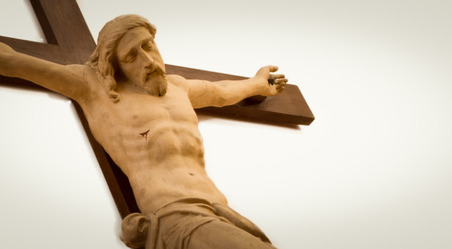
Finally, in so much as we may read first and primarily of Christ and not of ourselves as men: "you have set upon His Head a Crown of Precious Stones", we can and ought to pay reverence to the Sacred Head of Christ as the seat of all wisdom, human and divine, natural and revealed. One thinks that the humble Anglo-Irish schoolteacher and visionary, Teresa Higginson who sought to promote this devotion, was right about this and that her message has a relevance to the Church in this age and to our own hopes of a reunion of faith between England and the Holy See of Rome.
It is a thought and a devotion which parallels the Sacred Heart of Jesus as the seat of an infinite, compassionate and ever Redemptive love. If the Church comes to see the significance of this revelation of the Sacred Head of Christ, perhaps it will be better to focus it through the majesty, the power, the beauty and the integrity of the Face of Jesus - in the Crowned Head of Christ the King.
Perhaps also, it will bring home to many the majesty of a vision of Christ in which the Sacred Head of Christ enfleshes also the Image in human nature of the Sonship of God, of the Eternal Word through whom all things were made and who holds the primacy in all creation. It means that in Christ, most literally, before Sin, all fullness does indeed dwell. Then after sin, through His Passion, Death and Resurrection, all fullness of life restored dwells in surpassing measure. Literally, and without stint, Christ holds the Primacy of Creation and of Redemption in all things and of all Magisterium in heaven and on earth, over both the Invisible order and over the Visible order.
Oh the poverty and the wretchedness of the 'Bultman-ite' mind, even as scholarship! We who are the 'little ones' of Christ - 'the unlearned rabble that knows not the law....' - we give thanks to Him who is the source of our life, its status and its redemption, who has crowned us in Himself with glory and honour and manifested to us the truths that He has hidden from the sophisticated and the arrogant, with all the joys of sonship and daughterhood in the beatitude that these contain and in our Communion with Him.