



Articles
Crowd

Premarital Sex: Crisis The Church Must Face

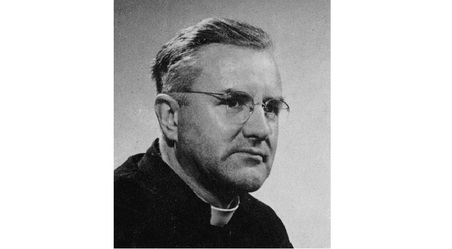
Edward Holloway

Parish priests are becoming alarmed and some of them very depressed at the attitudes to love and purity among their youth and among the engaged couples in their parishes. Living together is now an established pattern among the engaged. Almost all non-Catholic couples live together, sleep together, and save money together under the same roof for a year or more before the official wedding. Formal marriage can be delayed indefinitely and very many of these common law affairs disintegrate. Living together is also of course a common feature of our modern coeducational university residences, though without any question of long duration. It was a local lady magistrate, not the present crudely spoken writer, who referred to the modern university as “a high class academic brothel”. One would not, however, from the testimony of so many students, say she greatly exaggerated. In the matter of engaged couples, those who do not live under the same roof practically all take sexual intercourse at weekends for granted. Only a tiny minority make any effort, or see any virtue in leaving something in a relationship by which a lifelong love and commitment is consummated, to be hallowed under the blessing of God on the night of their wedding.  

Scandal within the Parish 

Attitudes are only marginally different among Catholics. Three out of four of our own engaged couples are living together sexually at least from the time of their engagement. Most of them have taken sexual union for granted a long time before. This assessment is true of the South of England; things may be better in more closely knit, more devout and doctrinally more orthodox communities, especially working-class, in the north of the country. One writes this for the benefit of bishops and priests who always say the writer exaggerates. Personally I don’t think there will be much difference at all. The priest about the parish will notice that the handful of youngsters he knows who strive sincerely to live in chastity before they marry, all come from the ‘traditionalist’ families in the parish. The word has nothing to do with liturgical preferences. It means families where the parents make a sincere effort to accept and live the faith and morals of the Church, as these have been constantly proclaimed by the Pope, against open dissent from theologians, bishops, priests and other laymen since the middle of the nineteen sixties. Among families accepted to be ‘advanced’ or ‘trendy’ there is little regular sacramental practice among the children after the age of sixteen, no teenage chastity, and of course no prenuptial abstinence. Why should there be?   All we pastoral priests know the pair who live together for a couple of years, and decide to allow a baby. Then they come along to finalise the marriage, asking for a Nuptial Mass, and perhaps some help from members of the choir. The baby is still unbaptised, and getting a wee bit elderly as babies go. Well, I refuse the Nuptial Mass and the request to the choir. I will always refuse the Nuptial Mass where the scandal is general, widely commented knowledge. To grant it in cases like these, with perhaps present members of the parish Youth Group grinning at one or two of their erstwhile ‘leaders’ is sheer condonation in the eyes of the kids of this manner of living and loving. It brings the Church’s liturgy and her very doctrine into disrepute, for the whole ethos of the Nuptial Mass, and its lovely blessing, presumes a status of sexual wholeness at least aspired to as a state, even if not actually a personal attainment. Of course, many of the brides who come down the aisle in white are much more discreet sinners. But there is a difference of impact between an ideal we did not manage to live, and the flaunting of broadminded concubinage, in which the house warming, with a general invitation to the youth of the parish, long preceded the banns  

Crux of the matter

We get little help from our bishops in the matter. Up and down the country there may have been a Pastoral Letter which has faced up to this challenge sweetly, lovingly, but with plain speech and firm doctrine of sex and of love. Myself, I have not noticed any through the pages of the Catholic press. There has been nothing at joint pastoral level. Pope John Paul, God bless him, always has the guts to face the matter when he talks to the youth of the nations on his Papal visitations, especially to the youth of the rich and decadent West. But, much more needs to be done. We need to get across a much more coherent expression of our doctrine and perhaps a lot of bishops and priests don’t find it easy to be fully coherent in presenting the teaching of the Church. Certainly a lot of priests say just this very thing. God help bishops if they apply to their seminaries or academic institutes for help. As most of their advisers reject Humanae Vitae in their hearts, bishops can expect a lesson in delicate figure skating on thin ice!   That sort of sermon about ‘relationships’  - whether written or spoken - never inspired any youngster, or saved any warm and lovable personality from self-destruction by confused lust from the age of fifteen years onwards. The Church needs to be able to say much more coherently and much more convincingly just why sexual intercourse must always, but always, in each and every act, remain open to new life. The crux of the matter is there. Answer that question with theological and philosophical coherence and you have a doctrine of sex in a state of love. Fail to answer it, by making sexual communion in its own right as joy, the natural fulfilment of married love, the natural fulfilment of love between man and woman, the essential physical accompaniment of joy of spirit, the necessary relaxation and release of the tensions of life, especially life together, etc. etc., and you can forbid nothing at all from early youthful masturbation to teenage sex, ‘shacking up’, homosexuality, and the marriage which is dissolved as soon as ‘our love has died’. Those who deny the doctrine of Humanae Vitae cannot sustain any absolute morality of marriage, sexual life, or of the indissolubility of marriage. That is why, in curias all over the Western world, they have been granting ‘nullities’ by the thousand which are simply divorces in the eyes of God. And the people know what has been going on.  

Purposes of Marriage

The old expression which spoke of the ‘primary’ and the ‘secondary’ ends of marriage was clumsy, and it does need a replacement. All the same, the doctrine thus enshrined in the dry language of Canon Law was true. It expressed not only an essentialist, or doctrinal view of marriage, but indicated also a psychological, a real life manner of assessing sexual communion in the lives, the loving and the consciences of the people of God. The dropping of this term in the Encyclical Humanae Vitae without any theological substitute, or carefully explained context, has been a theological disaster. Not that there was any ambiguity whatever in the Encyclical concerning the constant and therefore infallible doctrine of the Church. The howl of rage and dissent that went up in so many quarters proved there was no doctrinal ambiguity. Yet, the presentation of a procreative element or purpose over against a unitive aspect or purpose, from which unitive aspect the procreative possibility could never be separated out, did lend ground to a fatal ambiguity of philosophy and of speculative theology.   The presentation of aspects without clear definition of primary and secondary, failed to make it clear whether, as God sees things, the unitive end is defined through the procreative purpose, or is the unitive purpose intrinsically subordinated to the procreative, but not defined through it of its own nature? Or, is the linking of the unitive to the procreational potential of the sexual act something incidental, i.e. something done by the positive will and wisdom of God, so that both purposes or elements - the procreative and the unitive - stand in reality in their own right, (or formalities), but under a positive injunction that what God has joined together man shall not put asunder? For all practical purposes the non-Catholic Churches have gone on to a fourth position: the procreative and the unitive elements of the marital act are fully separable and not irrevocably joined together by God. They may be separated for a good reason, hence contraception is not a sin except when it becomes a sin of selfishness. It is not of itself a sin against the married state or holy sexual love.   The Church is full of theologians, orthodox men obedient to her solemn doctrine, who are teaching the second proposition, (while a number do in fact presume the third). The unitive function of sexual union is held to be subordinated intrinsically to the procreative function, however, in its own right it is defined as unitive, as an act creating love, fulfilling love and sustaining love without respect to the procreative meaning. This makes for an incoherent philosophy of love in the Church’s doctrine of sex. Such theologians are constantly teaching the full, and spiritually quite perfect enjoyment of sex in its own right, as a common joy in spirit and in sense, without any intrinsic relationship to creation of life. Sexual union may be desired and enjoyed “simply for the natural pleasure the Creator attached to the act”[1] without any question of positive imperfection. Mgr. Orville Griese, in what is otherwise an excellent article rebukes the Fathers of the Church, St. Augustine, Aquinas and the vast majority of leading theologians to the 20th century, for their churlish puritanism in suggesting that there is any imperfection in so seeking and using the pleasures of marriage. The sole requirement to be made is that only natural methods of birth control be used, so that the act is open to the possibility of new life.  

What image of God?
 
But, what sort of God have we made? Does He not care a jot for the happiness and lives of the spouses but only for His own creational plan regardless of misery? For these theologians wax lyrical in His name, outlining the joy and communion to be expected under His blessing from sexual intercourse with the careful, naturally produced exclusion of children, which the spouses in a given case may quite properly not want, and may indeed dread. Many even young couples can be in a situation where conception here and now may be a physical or a psychological disaster to one of them. Nevertheless the rule of God holds: no separation of the twin aspects of intercourse, although psychologically, according to these theologians, the two aspects may be quite separate existentially and in real life.  The climax of incoherence comes in the case we know well in every parish, where a woman in her early forties cannot now conceive without complications, such as severe blood pressure etc. The risk is so grave that certainly mother and baby will die if conception occurs and takes its course. Women in these cases will not trust any of the natural methods of birth control nor even the pill for that matter. They have recourse to sterilization. Their husbands, faced with a need to forgo natural intercourse for very long periods are also forbidden to use ‘other means’ than natural family planning. These men can quote every one of the excellent ends other than offspring or its possibility named by the theologians. They have often, in even the most holy and considerate of marriages, become as physically conditioned to their regular sexual union as they may be conditioned to their pipes or cigarettes. Why, in the name of mutual love and support, mutual comfort and so forth - quite apart from mutual fidelity -  may they not be allowed to separate out the unitive purpose of sexual communion, which stands in the relationship itself as an act, from the procreative element which they have through the years loyally fulfilled and which would now mean the death of their wives? There is no coherent answer, given the emphasis and presumptions of these theologians.  

The Pan-Sexual View
 

The non-Catholic world has already decided that sex is for making love. You decide if you want the children. But if not, then sex is for loving between a man and a woman living in an intimate communion of life. I have put it this way to elegant and sophisticated young things in my own parishes, and have found most of them enthusiastic for this formulation. That is how nearly all the modern world lives. We are back in the world St. Paul knew, the world of classical Paganism. Great Pan, the Goat-God of desire, he is Lord. When you love, you feel sexual desire, and the more you love the more you yearn to consummate it and sate it. You may take it. Sex is a response to loving. Animals have to be ordered by times and seasons to mate and rear broods, but man is higher. When he loves he may join the erotic pleasure in one physical experience of sense joy to any other spiritual joy that may be present. He does not have to deny himself and separate parts out.   Sex is for loving. It is of course a happy arrangement that babies can come from this conjunction of purposes, but in an overpopulated world in which offspring are in any case hideously expensive as they grow up, you don’t want too many of them. You prevent them by contraception, either natural or artificial, and a little regrettably by abortion too, as the final long-stop when contraception has failed. For sex is not only about children, sex is just as much about personal fulfilment in love.   When this reasoning is followed through, you find that sexual intercourse cannot be logically or coherently limited to marriage. Sex is for loving, learning to be mature and sure of each other in loving. It cannot be limited to engagement or commitment, for who can assess all the many degrees and crises of love? Masturbation can be justified, because it is an aspiration to a more mature relationship with another of the opposite sex. Homosexuality too is justified, because between two deep and noble characters of the same sex there can be a most profound and spiritual love, a communion of ‘David and Jonathan’, which David himself says in holy writ is “surpassing the love of women” (2Sam 1:26). Since in mankind sexual libido is a reaction to love and loving, who dare forbid this form of ‘fulfilment’ to spirits rare and deep above the normal - and so on, and so on.   That is why teenagers seek and indulge sexual libido with impunity from their earliest teens, as you can see at any commercial disco. Even at a Catholic school -  those known to me at least - they are never taught that masturbation is wrong, the matter is never mentioned. Neither are they ever taught that it is the Church’s doctrine that it is sinful to deliberately seek or provoke erotic pleasure upon one’s own body or that of one’s boy friend or girl friend. So when they go to a party, all this is one of the natural pleasures of growing up.  

Unitive Defined through the Procreative
 
The Church’s doctrine of human sexuality bears a different look if the unitive aspect of sexual union is not only subordinate to the procreative aspect, (as it must be if, for no reason at all, this purpose and possibility may be separated out) but if the unitive is defined through the familial, the procreative meaning. In that case God did not make sex for loving. He made sex for children in a permanent and holy state of loving, which is a different matter and a different doctrine from that of the modern world. Sexual union is certainly linked to love, but to love as it embraces all the powers spiritual and psychological of a couple, and harmonizes them into a natural state of love, in which a man and a woman share with God in the very creative love by which God Himself wills new life into being for time and for eternity.   In the human personality no pleasure of sense is an end in itself or for itself alone. Its indulgence is good if it is used to the measure of its function and purpose and not of its greed. We all exceed in the pleasures of eating and drinking, and it is most unlikely that the intense pleasure of sexual union is going to be exempt from any imperfection, greed or tendency to make it something of an addiction by force of habit. But sexual union, as an act and a pleasure, must also be judged by its meaning and purpose in nature. According to nature it is most clear that family is its primary and obvious meaning, and that by the law of nature it cannot possibly be used without the ‘risk’ or possibility of conception. This is obvious enough nowadays through all the miseries and anxieties of contraception itself. It was much more obvious even as little as three generations ago, when men and women who were quite as advanced intellectually and culturally as we are, did not know the rhythms of the generative cycle and did not possess the techniques of reliable birth control, natural or contrived. The only means of controlling birth they possessed in those days was to control sexual intercourse through human dignity, wisdom, and grace.   They could grow in love - in marital love - whose grace is ‘for better for worse, for richer for poorer, in sickness and in health’ by sweet consideration, or they could abuse each other. Likewise, the man could put his wife in her grave, and often did. Control had to come from within the grace of the human person, not from techniques natural or artificial, nor from clever chemicals. And it is from the sheer personality of man that we can best judge of the basic intentions of God. We can argue that in the beginning - apart from the fall, its stresses and its confusions and its frailties - God did not intend that sexual communion should be used for loving without reference to its familial purpose. From the beginning of time there have been countless reasons why a man of deep heart should not ask sexual union of a wife who, for grave physical reasons and the well-being of children already born, should not run the risk of further conception.   If God had intended the physical act of sex to be, of its own nature and in its own right, the perfect accompaniment of love between man and woman in marriage at all seasons of life, then there ought to have been, and there would have been, a natural means by which the two aspects would have been separated out by nature itself. Otherwise there would be, as there are now, many occasions when the law of God requiring the generative act to be open to life would contradict equally important natural ends of the act. God would then appear to be something of a monster, not the all-wise. In passing, it is not accurate to present our present knowledge of ‘nature’s way of family planning’ as God doing just this thing. We have discovered nature’s cycle of rest and renewal, and nature’s way of preparing for the next cycle of fertility. We may take advantage of it, with the Church’s blessing, for infertility or for fertility, but if it were ‘God’s way of providing natural, and to be expected birth control,’ then the good Lord should have given it by revelation a long time before we discovered it painfully and uncertainly so very recently.  

Relevance of Doctrine of the Fall

Far too many theologians teach sex and talk about sex without any reference at all to the doctrine and the fact of original sin and its consequence, the fall of human nature from its original perfection and attuning to the perfect will of God. As some of them do not believe the doctrine, this is understandable. Such people will never understand why there is so much stress, mystery and misery attached to human sexuality, as well as so much dignity and joy. Others think of original sin as merely ‘an extrinsic lesion’ in human nature, the loss of certain privileges which leave basic human nature just as it (‘naturally’ at least) ought to be. The doctrine of the Fathers, of Augustine and of Aquinas is again quite different. They teach an intrinsic lesion or wounding in human nature, a real and existential loss of natural good and ease in the things of God. Original sin has by its effects of disobedience to both the natural and the supernatural law of God, ruptured the natural orientation to God by which man ruled his passions of body and of spirit by peaceful wisdom.   And alas we have lost willing right reason in the grace of God and according to the valuations of God; to take the pleasures of the body with simple joy, and stop most willingly before the point is reached of greed or undue valuation is true innocence. The effect of sin - because it is an act of both disobedience and greed -  has broken the perfect response of nature to its God and the law of God, a response which, before sin, all created nature has obeyed. The effect in man’s nature is to make him coarse and lethargic in response to perfect good, disordered and tumultuous in his desiring, and addictive in his overdeveloped pleasure and power drives. This sheer fact of the human drama is wonderfully reported by St. Paul in the Letter to the Romans chapters 7 and 8.   This is the theological meaning of concupiscence as the physical penalty of the Fall in man, a penalty passed on by natural generation. There is nothing abstract about it, it is a living, very relevant fact. To the legacy of original sin we add constantly through life by our own deliberate sins and unresisted imperfections. Grace, given us again fully in Christ is a principle of partial healing, and it brings forth precious and beautiful fruits in even a wounded nature. But, we are not as God made us, nor, this writer would suggest, in the depths of our self-division as God could ever have made us. It ought to be said that ‘concupiscence’ does not mean sexual libido or lust, though in English it is mostly used that way. It means all disordered desire in human nature which is a damage and a deviation from the original perfection of man as God created him in grace with a nature attuned to God without these self-divisions, in peace and in joy. While concupiscence in theology (1) does not mean just sexual craving, it certainly does include the concupiscence of man for this most intense and most sought after of the bodily pleasures, whether out of marriage or, all too often, within marriage itself.  

Holiness in Courtship
 

God did not make sex for loving. Sex is the specific pleasure of the organs of generation. It is linked to loving, but is not of itself an act of human love. Human love of itself is an experience of joy and fulfilment which has many degrees according to its depth and nearness to God. It is a joy, and it is an experience. In the body it also has a physical accompaniment: tenderness, and happiness in possession which calls forth the embrace and the caress. This may be enjoyed in any state of life. Such love will often prompt sexual desire and pleasure, not because this is natural in loving, but because it is the triggering effect of the Fall in man, and the constant ages long association of all human love with sexual pleasure. It may not be deliberately accepted or indulged by the will. Unless it will lead to sinful consent it can be separated out from the loving, and firmly set aside, without necessarily obliging one to desist from all tenderness. It is not part of the rights of love, not even between a man and a woman, a boy and a girl. It certainly may not be accepted and enjoyed as part of deep human love or friendship between man and man, woman and woman.   In loving there is a special warmth, and a quite delightful sense of complementary love and happiness between man and woman, especially when this is accepted as likely to lead on to a lifelong communion of love. This joy - at once spiritual and natural - of the soul and of the flesh is first in a mutual warmth, contentment and joy. The erotic desire is not directly part of it. Most certainly - in youth especially - it will trigger sexual desire. Again, this must be set aside and not accepted or sought. It can be, if love is without ‘flap’, and then tenderness with honesty and humility, and within reasonable limits, can also be indulged. The sexual libido may not be sought or consented to. Once again, this is not an act or a right of human loving. And young couples, including the engaged, do not have a right to it. It is not an act of their love. It is an act of love when it is a right and natural accompaniment, as a pleasure of the flesh, of the most noble act of the body as flesh - which is to minister to God in His own creative act of love for us.   In this act the soul joins with its own deep love and joy in the beloved, a love most deeply spiritual, for it is an office of life in mutual fulfilment, spiritual and physical. The body too shares, not simply in the pleasure of sexual union, but in the joy and tenderness of mutual fulfilment in life, in vocation, in peace and in joy. All this is within a lifelong commitment of love which, while it embraces every aspect and need of life in man and woman, spiritual and natural, is a joy and a vocation defined through this mutual ordering of their bodies as male and female, defined through a mutual work in which their own love and mutual commitment should accept children with a joy which is a reflection of the Lord’s own desire for them and happiness in them for time and eternity.   It is the body that is taken up to the order of the spirit, and is conformed to its order and meaning. The flesh and the merely erotic as pleasure is not an end in itself, nor when it is so indulged does it support mutual fidelity. Since the sexual act consummates a sacrament of Christ between the baptised, it seems to this writer that it must be, materially speaking, a sacrilege to so use the body outside marriage. For sexual union is necessary for the perfect and irrevocable bond of the sacrament of matrimony. If this is true, we should teach it  

The Lawful and the Perfect
 
The teaching of the Church can be justified only upon the presumption that family is the original reason of God for the creation of sexuality, and that the use of sexual union as copulation to foster marital love and joy, to fulfil and mature personality etc., is not intrinsically necessary, and was not part of its original function except in its relationship to new life willed and gladly accepted. In that case sexual union is still not necessary as part of its most perfect function in loving, when family is rightly not desired and should not be attempted. Sex in itself is just a physical delight of the body. And its function in life, love and marriage, though complex and important, is very much overemphasized in this very carnal and hedonistic age. The spiritual joy of love and communion, and the physical joy of tenderness and caress are more important to the fostering of mutual love, and more likely to hold a marriage together.   We can all agree - and it is the wise rule and provision of the Church from the age of the Fathers, and not just now -  that couples should not tempt themselves and each other beyond their spiritual powers by “defrauding one another”, in the words of St. Paul (1. Cor 7:?). Even here, St. Paul does gently insinuate that continence, presumably when children are not desired, is in itself more perfect To use the permitted means of natural family planning so that the act of sexual union is always open to new life, is to behave in such a way that one may, by degrees, grow more loving, more considerate and more faithful in one’s marriage. It is also subjectively the better way and the more perfect way for hot and passionate young spouses, especially when under constant temptation at work.   At the same time, the recognition of an element of imperfection and addiction in the need to have and to seek a sheerly bodily pleasure, which - in their present rightful desire to avoid more family - is only incidentally attached to their love, their tenderness and their belonging to each other ‘till death do us part,’ does come to many maturer couples and to not a few younger ones. I think they are right so to perceive; and that the early Christians and the Fathers of the Church, together with Augustine, Aquinas and the greatest thinkers of the Church until the 20th century, were right to think the same. In any case, until and unless a couple come to recognise that the use of sexual intercourse, except with some relationship to new life, is in fact an objective imperfection and in themselves personally a subjective imperfection, there is no point in pushing the matter. To do so would be unwise. But to those who do perceive and ask, the most perfect way should at least be taught. It also makes a perfect sense of the will of God and law of God.   God cannot change the law of his wisdom because of human sin or human imperfection of nature since the Fall. Through the prudent use of natural family planning, young couples who are loyal to the Church but far from heroic souls, can help each other up to God by a love which is genuine and faithful; a love which is unitive and linked to the three great blessings of marriage: the sacrament, the joy of family, and the joy of faithful, vocational, and complementary love till ‘death do us part’. These have always been the reasons why the great saints through the ages justified and allowed holy Christian marriage in which perhaps for reasons of age no children could hope to be born. In the old indeed they did insist the more on an element of objective imperfection. In the young, perfection must come by slow degrees, and nobody is holy or humble who would run before he can walk. There can come a time when the call of God within the spirit encourages us to run in the ways of God rather than walk.   Not for any reason, however, can the love of couples, however young, be justified in their sexual intercourse if the basic and primary openness to life of their relationship is removed. This removes also basic obedience to the mind of God and the truth of God from the unitive love. Little by little if this occurs, sensual pleasure, even within the limits of marriage, is indulged more and more as an end in itself, as every pleasure must be when its use is withdrawn from conformity to the mind and will of God when He made its function and its pleasure. No love that leads away from God is going to increase a godly and spiritual faithfulness in the spouses. General contraception has done nothing in the world of today to make love or marriage more happy, faithful, lasting and reverential. Without a reverential element in its use, sex becomes a great destroyer.  

The Incoherence is in Man
 
When a certain age is reached, or certain physical crises occur, if no natural means of avoiding conception is trusted or is acceptable, then in the name of a love, natural and proper to marriage  - a love persisting ‘in sickness or in health’ in order to ‘love and to cherish’ - abstinence and the more perfect way must be accepted. If it is, the love will be found to be the more sweet and more intimate. God does not call us to mutilation but to perfection, and in some circumstances of life, either in action or in witness -  as in times of persecution - we are brought face to face with the single meaning of His truth and His utter holiness, and there is no lesser way open to us. It is not God who is incoherent, it is poor human nature that is incoherent and never so much as when it is revealed in the basic imperfections that most of us take for granted. One look at the crucifix should tell us enough of what original sin and its effects did to human nature and the havoc it wreaked on the one Man who was utterly perfect. This writer finds that the doctrine of the Church is fully coherent to the young when explained through the teaching of the Fathers of the Church and the great saint theologians through the ages.   Once you begin to state reasons that in themselves are, actually, independent of the creation of life as a true and perfect reason for the use of sexual communion, then the young draw their own conclusion, that all means of contraception are equally justifiable and we can enjoy sex ‘because we are in love’. Therefore the doctrine of the Church can be ignored with a grimace of disgust because it is incoherent and legalistic. Finally, whatever view committed Catholics - priests or laity - may take of the views of this writer, the Church, through Rome and her bishops, must face up to this crisis of love, especially in its premarital aspects. We must teach a doctrine of coherence and perfection. Otherwise we will live to see the total destruction of marriage and youthful chastity.   There will be very few recruits too to a call to celibacy, if the doctrine of sex is incoherent from one aspect and hedonistic from another. To show the majesty and the integrity of love, we must first justify obedience to the intellect and truth of God in the creation of male and female. Then indeed we can justify a sacrament of marriage restored in Christ, and the call of a yet nobler and sweeter love, in purity but not in deprivation, in the likeness of Christ, the Priest, Prophet and King.

[1]Orville Griese, ???? in  Homiletic & Pastoral Review, January 1981 vol   no