



The Church
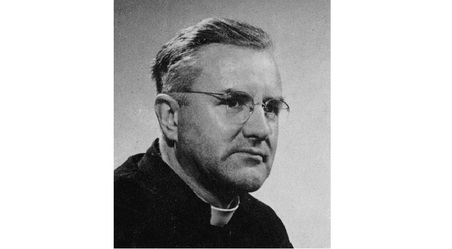
Edward Holloway
Christ and the Church: the living link
The Church of Christ is also the People of God and the brethren of Jesus Christ. This people and these brethren are not so named emotively from simply their love for Christ or their personal devotion to his gospel. The relationship between Christ and men which brings into being the Church of Christ, is a living link with Christ and his disciples which engages the whole Personality of the Son of God and of Man, which permeates the life and vocation of the individual Christian, and the whole life and vocation of the Church as membered one man to another in Jesus Christ. The Church is an existential phenomenon not an abstraction, it is a Body which lives through Christ, and the relationship of Christ to the brethren which is synonymous with ‘the Church’ is always an existential relationship. It is not a once and for all legal act. From this heart-spring of the Life of God mediated to men, there will be effected in the power and in the prayer of Christ, both the unity which is orientated to the authority of the Godhead, and the universality which follows upon the equality of men, and the identify of the salvific will of God towards every rational creature. In brief, it must bring to pass, this living link, this inflowing of a Life, both unity and universality, the one Church Catholic among the nations of the earth.
When we say that Christ is the ‘Head’ of his Church, we forget all too often that if he is ‘the Head’ he is also a member of the Church, for the head is the chief member of any body, and the body we call the Church is compacted and membered unto her living head, who is always Christ Our Lord. It is his life that flows through the body of the Church, his truth which enlightens her, and his authority living within her which proclaims the truth to mankind. It is the same truth with the same authority which teaches the faithful with a deeper fullness of insight into the bearing of Christ’s Revelation, when men come, as did the disciples of old, to the Master, bringing new doubts and difficulties of men and of new knowledge discovered by men.
There can be no doubt that such is the existential relationship of Christ to his Church. It stands in the prayer of Christ before his Passion, the prayer to the Father which cannot go unfulfilled. It is a prayer for unity and charity and knowledge of the truth, and a prayer too for those who over the ages, shall come to believe through these first chosen ones. It lives in the statement that ‘he that hears you, hears me, and he that despises you despises me, and he that despises me despises him who sent me’. Or again, what are we to look for and expect, if we give the real and not merely the notional assent of the mind to that command ‘all power is given to me, in heaven and on earth, going therefore teach all nations, baptising them etc.,.... and behold I am with you all days, even to the consummation of the world? This is solemn enough commission, and more so in conjunction with the assertion that ‘as the Father has sent me, so also I send you’...
It is a continuity of work and operation which is stressed here, and the unique authority behind the Christian gospel to the peoples is so clearly the divinity of Jesus Christ. There is no other title on which power can be given to any person in heaven and on earth, and that until the end of time. The Church of Christ over the ages is always the same work of the Master, a work which continues with the same essential characteristics and habitude to men, as when Jesus Christ walked among Israel before his crucifixion, his physical resurrection from the dead, and his ascension from the present order and relationships of human time.
He still works and lives in his Church and among his people, who are also the Kingdom given him by the Father, and from the epistle to the Hebrews we have it that as Priest and Mediator he is ever-living to make intercession for us. The Church is a life in Jesus Christ, not a static imputation, she extends his personality and his salvific work through time, and he himself when he prayed for her in the persons of the apostles and the disciples at the Last Supper, did not forget to pray for them also who though not yet born, were to believe through the continuing mission upon earth of these first apostles and disciples.
If the plenitude of the work of Christ passes over to the apostles with the same characteristics as the Saviour himself has it from the Father, then the communication to men from the Church of Christ is the fullness of the intellect of God in Jesus Christ, which is to say, the fullness and the certainty of the infallible truth, and this is the characteristic of Christ which is most stressed in his eternal name of the Logos, the immanent Word of God. There must be the fullness also of the authority of the Incarnate Word of God, who did not hesitate to take upon himself with authority the correction of the law of Moses and to revoke the permission of divorce, given ‘for the hardness of your hearts’. On earth it was said of Christ that ‘never did man speak like this man’, for authority was of the essence of his teaching. It had to be, he was God in Person. If his work continues unchanged in essentials in his Church, then the same authority is there the authority of God, which is final, and which once said cannot be unsaid or gainsaid.
If the plenitude of the work of Christ passes over to the mission and work of his Church, then the plenitude of divine charity will also be there. It will be present first of all in the life which binds the Christian to the Father, the Son and the Holy Ghost, and then beyond, it will animate the relationship of the brethren one to another membered as they are, as Paul reminds us, in a common body of service and of love. It will spread out to the spiritual needs of all men and their temporal needs as well, and this dedication in the likeness of Christ will urge and spur the Church, even when her members flag, and dishonour the Christian name, for the charity of Christ presses us, it is hard to kick against that goad. These things, divine truth, divine authority, divine love are of the essence and of the constitution of the Church of Christ: they permeate her social vocation and also the individual vocation for every man who is born again of water and the Holy Ghost.
(New Synthesis pp 279-281)