
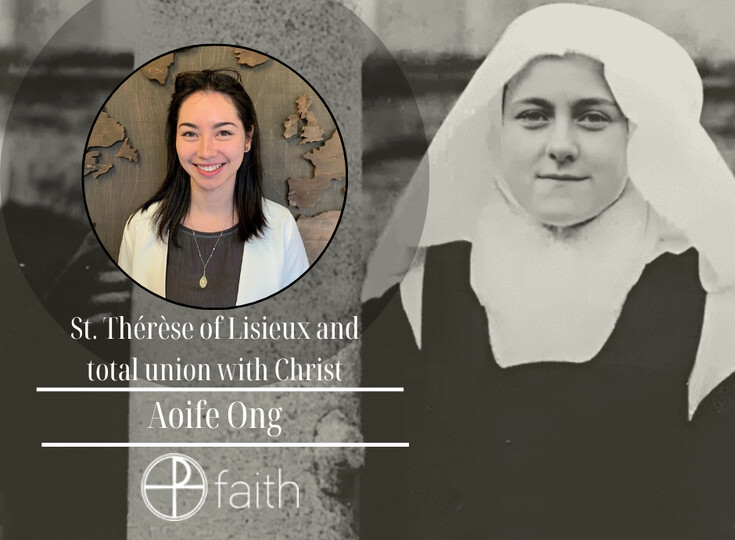
Saint Therese and total union with Christ
“Story of a Soul” was the first autobiography of a saint I ever read. It was the winter of 2016, and I was given the book by a Carmelite nun whilst on retreat at her convent. For a 19-year-old who had only just begun to understand and experience the beauty of the Catholic faith, I was baffled to read of a life and upbringing so starkly different to my own.
At the age of five, I was obsessed with princesses and mermaids; at five, St. Thérèse was already pondering the things of Heaven. At fifteen, I was learning to use makeup and giggling over boys; Thérèse, on the other hand, had obtained special permission to enter consecrated life. At nineteen, I was out exploring the world as a young adult; she was behind the grille, in silence and prayer.
Though some may scoff at her extraordinarily sweet demeanour and childlike simplicity, the Little Flower has drawn in masses of devotees, including myself.
Despite living a hidden life, she is one of the most widely known saints, with many traditions, celebrations, and novenas in her honour. I often ponder what it is about the Little Flower that captures the interest of so many. The first word that comes to my mind when I think of St. Thérèse is “purity”.
“Blessed are the pure in heart, for they shall see God.” – Matthew 5:8
Today, one may have a narrow understanding of what the word pure means and might reduce it simply to sexual continence. However, the original Greek word used in this verse is katharos, which more fully translates to clean, pure, and clear – both in the literal sense (when referring to material substances or physical cleanliness) and in the spiritual sense (when describing someone’s virtuous character). In this context, it refers to someone who is free from any form of corrupt desire, sin, or guilt. A key word here is desire, since true purity stems from inward intention (cf. Mark 7:18-22). Indeed, Thérèse was so consumed with a true desire for purity and had such an extreme aversion to sin that, after her general confession, her spiritual director exclaimed:
“Before God, the Blessed Virgin, the angels, and all the saints, I declare that you have never committed a mortal sin.”
Free from the burden of mortal sin, St. Thérèse had the capacity to see God with great clarity. She saw the grandeur of His divine love effortlessly. In response to this love, Thérèse in turn bore a profound love for her Holy Spouse. At the pinnacle of her devotion to Him was her love for the Eucharist. Thérèse had a deep longing for unity with Christ through Holy Communion and took great delight in receiving Him daily. In one of her poems, “My Wishes Before the Tabernacle”, she describes her envy of corporals, patens, and chalices because of their intimate proximity to the Most Blessed Sacrament – all while acknowledging that He is unreservedly hers when she consumes Him in the Mass. By her intentional receptivity during Communion, the life of Christ dwelt within her and occupied the entirety of her undivided heart and mind. In Him, fully, did she live, move and have her being.
The fruit of this loving relationship between God and creature was evident in her daily endeavours. The “Little Way of Spiritual Childhood”, which St. Thérèse is perhaps most well-known for, is her philosophy of undertaking seemingly little things with great love. With this in mind, the joy Thérèse found in the Eucharist overflowed into the rest of her day: she was famously sweet to her fellow sisters in the convent, she committed herself to little works of service and charity, and she faced suffering – even very grave suffering – with extraordinary fortitude and patience.
Although these aspects of St. Thérèse’s conduct made her a great saint, perhaps her most noteworthy mark of holiness was the simple response she had to her vocation. Thérèse wrote in her autobiography that, in prayer, she was moved to a great desire for many vocations – that of a priest, a soldier, an apostle, and a martyr, to name a few. After speculating in some detail about the great and mighty acts she would perform in such vocations, Thérèse concludes that, through this examination of her zealous desires, she at last found her true vocation, which, quite simply, is love. She writes:
“I understood that love embraces all vocations, that it is all things, and that it reaches out through all the ages and to the uttermost limits of the earth, because it is eternal.”
With this profound understanding of her vocation, St. Thérèse continued her life of prayer and equated her small daily sacrifices to the grand sacrifices she would have made in other vocations, since she saw that her little offerings were most pleasing to God. She says:
“I will let no tiny sacrifice pass – no look, no word. I wish to profit by the smallest actions, and to do them for Love.”
Because of the exemplary mission of her heart to practice great love in all things, this enclosed contemplative nun was named the patron saint of missionaries in 1927.
After examining the simple yet saintly life of St. Thérèse of Lisieux, what can we as ordinary laypeople learn from her? The answer, in fact, is that we can learn quite a lot. St. Thérèse is a Doctor of the Church, which means that her writings and spiritual insights are relevant for all people and for all ages. The reality is that most of us will not, in our lifetime, perform grand acts such as founding a religious order, writing great theological works, or enduring physical martyrdom. However, St. Thérèse shows us through her example that, with a great desire in our hearts to honour God, all we need to do is diligently commit to our little, ordinary things with extraordinary love. Like Thérèse, we can cultivate simple, pure, all-consuming love by uniting ourselves to Christ in the Eucharist. If we do this we will, like the Little Flower, bring joy to the Heart of Christ our Lord.

Recent Blog Posts
Saint John Paul II: A man truly alive
Blog: 22.10.25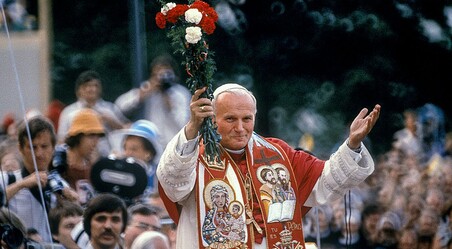 Saint John Paul II: A man truly aliveSr Andrea Fraile Pope St John Paul II, whose memory we honour today, was a man of such breadth and depth that it’s difficult to know which facet of his life to pin down in a few words. The most obvious angle for me, certainly, are his thoughts surro...Read More
Mary, the Rosary and the Logic of the Gift
Blog: 07.10.25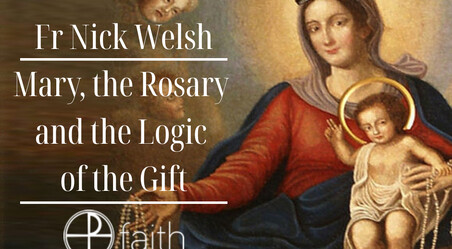 Mary, the Rosary and the Logic of the GiftFr Nick Welsh Since 1208 when Our Lady appeared to St Dominic, the rosary has been a staple feature of the Church’s devotional life and a powerful means of intercession. In certain ecclesiastical circles it is considered, pejoratively, as a pra...Read More