Saint John Paul II: A man truly alive
Blog: 22.10.25Read MoreSaint John Paul II: A man truly alive
Sr Andrea Fraile
Pope St John Paul II, whose memory we honour today, was a man of such breadth and depth that it’s difficult to know which facet of his life to pin down in a few words. The most obvious angle for me, certainly, are his thoughts surrounding the encyclical he wrote 30 years ago, Evangelium Vitae (the Gospel of Life). Still, obvious as it might be, I’m going to stick with it: an issue that is more polarised than ever on both sides of the Atlantic, perhaps we should revisit this spiritual giant and enquire anew as to what it means to be pro-life. What did he mean when he wrote of the Gospel of Life and of creating a civilisation of love?
I was 20 years old when Evangelium Vitae was promulgated, and it was hardly a surprise to read an affirmation of the dignity and sacredness of every human person in the midst of the various assaults on human life that have led to what St John Paul rightly called the culture of death. But the words that really arrested me as I read it were the words of Christ Himself: “I have come that they may have life and have it to the full” (John 10:10). These words, that I’d heard so many times before, became in that moment a guiding light and the mustard seed of my vocation. It struck me then, and now with even greater clarity, that to be pro-life is so much more than saving lives at all costs – which is, lamentably, how the pro-life movement is increasingly perceived. It is about creating the conditions by which human life can be cherished and allowed to flourish.
John Paul saw the dignity of personhood through the lens of culture and, for him, a culture that has divorced itself from the Gospel is, de facto, a culture of death. (See Tracey Rowland, The Culture of the Incarnation for more on this.) The civilisation of love, on the other hand, is nothing less than the declaration of Jesus Christ as the Master Key to the meaning of the universe, the goal and fulfilment of human history.
The civilisation of love speaks of an attitude towards life and love so alien to what we commonly experience. It means that power and autonomy give way to love, vulnerability and dependence; it means that the heart, so often silenced by the head, is given space and time to reflect on what it truly desires; it means that the mystery of a person is welcomed and not reduced to mere biology and history; it means that creativity is nurtured and lauded as a thing that marks us indelibly as human, not as a sideshow to the serious business of work and frenzied productivity. Everything St John Paul was, everything he wrote and did, spoke to this flourishing of human life: the dignity of work, the inextricable link between faith and reason, theology of the body, the feminine genius; his towering presence in the face of Communism, the Carmelite spiritual tradition that resonated with him so deeply, his plays and poetry, his famous expeditions to the mountains with his students and so forth. (If these last two seem relatively unimportant, consider the words of Josef Pieper in Leisure: The Basis of Culture: ‘Leisure is a receptive attitude of mind, a contemplative attitude, and it is not only the occasion but also the capacity for steeping oneself in the whole of creation.’). The mystery of creation leads us to what is hidden and invisible and, when we see that, we have no trouble recognising the dignity and infinite worth of every human being.
Banners, slogans, chants and marches have their place but, for those pro-lifers who shy away from the polarisation and acrimony they represent, let us remember the life and witness of St John Paul for whom giving a family a pram, teaching a mother to make soup and encouraging a person to write are all part of the beautiful business of creating a civilisation of love.
Here was a man truly alive, who held the key to life for all of us: it is Jesus Christ who gazes at us and says, “I have come that you may have life, and have it to the full.”
Mary, the Rosary and the Logic of the Gift
Blog: 07.10.25 Mary, the Rosary and the Logic of the GiftFr Nick Welsh Since 1208 when Our Lady appeared to St Dominic, the rosary has been a staple feature of the Church’s devotional life and a powerful means of intercession. In certain ecclesiastical circles it is considered, pejoratively, as a pra...Read More
Saint Therese and total union with Christ
Blog: 01.10.25 “Story of a Soul” was the first autobiography of a saint I ever read. It was the winter of 2016, and I was given the book by a Carmelite nun whilst on retreat at her convent. For a 19-year-old who had only just begun to understand and experience the beauty of the Catholic faith, I was...Read More
-
The Faith Vision
When Faith magazine began in the late 1960s, it was part of the reaction by worried priests and people to the chaos and uncertainty of the years immediately following Vatican II and in particular the widespread dissent in the Church to Pope Paul VI’s encyclical Humanae Vitae. The magazine was first called Kephas to emphasise solidarity with St. Peter and the Holy See. But the clergy group associated with it soon split, with a more conservative camp who saw the Tridentine Mass as the key issue and mostly opposed Vatican II, and others who could see great value in the Council and wanted to oppose the errors done in its name rather than Vatican II itself.
Deeper issues
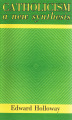
Fr Edward Holloway was not only in the latter more moderate camp but also saw deeper underlying issues. The crisis in the Church, he argued, had been building up ever since St. Pius X had clamped down on Modernism in the early years of the 20th century. The Church had gone into defensive mode and refused to engage with modern science, especially evolution and its implications for the Catholic doctrine of Creation and the nature of human beings. Developing ideas from his mother, Agnes Holloway (who believed she had received them by a private inspiration), Holloway worked out a ‘new synthesis’ of Catholic teaching in the perspective of modern science. He first wrote a book which he called Mind and Matter which was privately printed and distributed to friends in a limited number of copies. Later he re-wrote the whole book and published it as Catholicism - a new synthesis.
When he took over the editorship of the now re-named Faith magazine, he wrote about this fundamental issue in his Editorials, and younger priests of the association linked to the magazine also began to write along the same lines. In 1972, he and Fr. Roger Nesbitt founded the Faith Movement for young people, originally based on a group at the John Fisher School in Purley, Surrey, where I then was a pupil. With others of the group, I was inspired by Fr. Holloway’s presentation of the Faith which answered modern questions. Like all the young Catholics of my generation, I was aware of the huge scepticism towards the Christian religion and saw most of my contemporaries lapse. To modern people, the Christian picture was out of date: the bible depicts God making the world in six days – how could this be reconciled with evolution? And if human beings have souls as well as bodies, how does that fit in with us being descended from the apes? And now that sexual liberation had arrived, how could the old Christian morality possibly be defended?
Fr. Holloway was a brilliant and compelling speaker, and we heard him at the newly established Faith Summer Sessions and on retreats. His book looked a fearsome read but proved not impossible for a Sixth Former. Later his more complex philosophical writings, about the need to update Thomism, were published as pamphlets. But you don’t need to be a philosopher to grasp his theological ‘line’ which presents the Catholic faith in an evolutionary perspective and enables you to see it as a whole. He was an ordinary parish priest, not an academic, though with a very gifted mind and a magnetic personality. His aim in the Faith Movement was essentially catechetical – not theological speculation but Christian formation.
Evolution and the cosmic vision
Far from seeing evolution as a problem for Christians, Holloway sees it as evidence for the existence of God and of humankind’s spiritual nature. Drawing on the scientific evidence of what we know about how the universe was formed at the Big Bang, he sees all matter-energy as poised in an equation which determined the way the universe would unfold in its immense complexity and size. This, he argues, is not a random process but a mathematical one, as Physics shows us. The universe, as it expanded incredibly rapidly after the Big Bang, was going somewhere - it was producing order and pattern of enormous complexity; and the end result of that unfolding pattern is us - human beings, with all our intellectual, artistic and technological potential. We are only possible because of the precise conditions that existed at the Big Bang, the precise balance of matter-energy which would enable galaxies to form, stars to exist, planets to cool and life to evolve.
Holloway calls this infinitely complex mathematical unfolding of the universe an expression of a Unity-Law of Control and Direction. We all know that there are scientific laws which express how matter behaves – such as Boyle’s law for gases and others – and Holloway points out that they are all really aspects of one great Law which controls the way the whole universe behaves. In theory it might one day be possible to write an equation which would express this Unity-Law mathematically, rather like the famous e=mc2 of the law of relativity. This Unity-Law is an expression of what Stephen Hawking was later to term ‘the mind of God’.
Christ the Logos
This fits in with the theology which we find in the New Testament about the very nature of God. St. John’s Gospel begins with the famous Prologue: ‘In the beginning was the Word, and the Word was with God and the Word was God’. Our English term ‘word’ translates the original Greek term ‘logos’. This means more than just a spoken or written word. ‘Logos’ means wisdom, reason; it has given us our English word ‘logic’. Although St John was writing in Greek, like all the New Testament authors, the concept can be found in the Hebrew Scriptures, in the Wisdom nooks of the Old Testament where the Wisdom of God is personified as playing amidst God’s creation in the beginning.
In Jesus, this Wisdom or Logos of God, the content of His Mind, if you like, which is God Himself, has become incarnate as a human being, born in Bethlehem. The man Jesus Christ is God himself among us, the meaning of the universe and the Divine Person through whom it was made. So, for Holloway, the Incarnation of the Son of God is not an afterthought by God, a sort of rescue mission because things have gone wrong - although they obviously have: that’s the problem of evil we call Original Sin. God’s incarnation is the fulfilment of the plan which he made before the beginning of time. He created the universe through his Word and for his Word, to unite his creation – us, the human beings he has evolved through millions of years – to himself in the God made Man who is Jesus. Holloway thus takes the view of the Incarnation associated with the mediaeval philosopher Duns Scotus. It is also the view taken by the Greek early Fathers of the Church, so Holloway’s theology is deeply rooted in the Church’s earliest theology. You could see it as part of the ‘return to the sources’ called for by Vatican II, though Holloway was developing his ideas before the Council.
The nature of human beings
Holloways deals in an original and persuasive way with the question of what makes human beings different from animals whilst being evolved from them and sharing so much of our nature with them. His principle is that all matter, even in the complex form of a highly evolved animal like an ape, is essentially controlled by its environment. In fact any animal is living in a complex ecological balance within its environment and can’t exist outside it. So an animal in its natural habitat is constantly responding to stimuli which are telling its brain when to when to eat, to run, to fight, to mate and so on. Of course, in the case of a higher primate this is a complex process and the animal will be making ‘decisions’, though they will really be determined by the whole of the biosphere within which it is living and moving. The animal brain, therefore, is a kind of soft interface between the organism and its environment.
With the evolution of human beings, however, a new kind of being has arrived in the biosphere, says Holloway. Here is being with a brain which is so large and so complex that it cannot be controlled and directed by its surrounding environment alone. Sure, a lot of what we do is still instinctive, our natural response to environmental stimuli. But the history of human beings shows us going beyond such purely instinctive behaviour. Our art, our technology, our language and philosophy, show human beings able to exercise choices which lead us to be able to transcend our environment, indeed to dominate it in ways which can be both good and – as we realise today all too clearly – evil. This ability of the human brain to transcend the very ecological system out of which it evolved shows, says Holloway, that we are more than animals, more than ‘flesh machines’. Our brains are too big, too complex, to be controlled by matter alone. They need, they demand, control by something beyond matter, what we call the spirit, that is, the human soul. So the final mutation from ape to human being means that a being has evolved on the planet that must have a soul. And this soul cannot be controlled and directed by the material environment about it. It seeks a spiritual environment, or rather an environer – and that environer is God for whom and through whom it is made.
From Creation to Revelation
Holloway argues, therefore, that religion – God’s revealing of himself to human beings – is something we should expect in human history. It is an intrinsic part of the unfolding of the Unity-Law. Religion is thus, in this sense, natural to human beings; or you could say that, through God’s grace, it is natural to humans to become supernatural. We will naturally seek our true Environer, God, and, more importantly, he will seek out us. So we should expect there to be a Revelation. And of the many experiences of the spiritual which human beings have found throughout world history, there is one which has revealed God as our creator who loves us and wants to show how our lives should be lived and how to share in his divine life. This is the monotheistic revelation made to the people pf Israel with its messianic promise that it would spread to the whole human race, so that Abraham’s descendants would be as many as the stars in the heavens. And this process of God’s revelation of himself comes to its climax in Jesus Christ, the ultimate revelation of God because he is God himself.
Sin and Redemption
In later chapters of his book Holloway deals with the tragedy of Sin – something not intended by God and not intrinsic to matter-energy – and how Jesus redeems us from it. He also places the Church in this same perspective as the continuing building up of the kingdom of God in the world and the continuing development of an infallible teaching authority until the end of time. And he argues that in this modern scientific age we need a new synthesis of science and religion to show the truth and beauty of the Catholic Faith in the perspective of the new knowledge given us by the sciences. This surely is indeed an urgent need. The average enquiring teenager knows that ‘Adam and Eve has had it’ and thinks that science has disproved the Christian faith. Some fundamentalist Christians make the mistake of rejecting the new knowledge that evolutionary science has given us and think that this is the only way they can hold on to their faith. But Catholics have never relied on a literalist interpretation of Scripture, and the Church’s magisterium has embraced modern scholarship which enables us to understand the Scriptures in their historical context.
And this ‘line’, this evolutionary perspective, gives us the vision of the cosmic Christ, the perfect man and God himself, who assumes our nature, redeems it on the Cross, and offers us the grace to transform our fallen natures by sharing his divine nature. Here is a vision to thrill us and the way to understand - and live out - the teaching of the Church which, despite the disfigurements of sin and corruption among its members and sometimes its leaders, continues Christ’s saving mission down the ages, especially the ‘hard sayings’ on sex, love and marriage which our confused and broken world so desperately needs.
The future
Catholicism: a new synthesis is a book rich in theological insight. I found it gave me an intellectual perspective and foundation to my faith which have stayed with me all my life. But the work of the Faith Movement is about more than promoting a book. Holloway’s perspective is an apologetic and a catechetical programme for the formation of young Catholics, equipping them with the intellectual confidence to believe and witness to the Catholic Faith in an increasingly unbelieving world. My late wife and I were involved with the Faith Movement from its beginning, so the ending of this magazine is a great sadness. But it is essential that the Faith ‘line’ continues to be taught and the formation of the next generation continued – this is the great need in the Church today.
Andrew Nash has been the Book Reviews Editor for FAITH.